


Lately I had a chance to take photos of a sunset over Leadville with the iPhone 14 pro! It’s a very fun camera to have on hand.
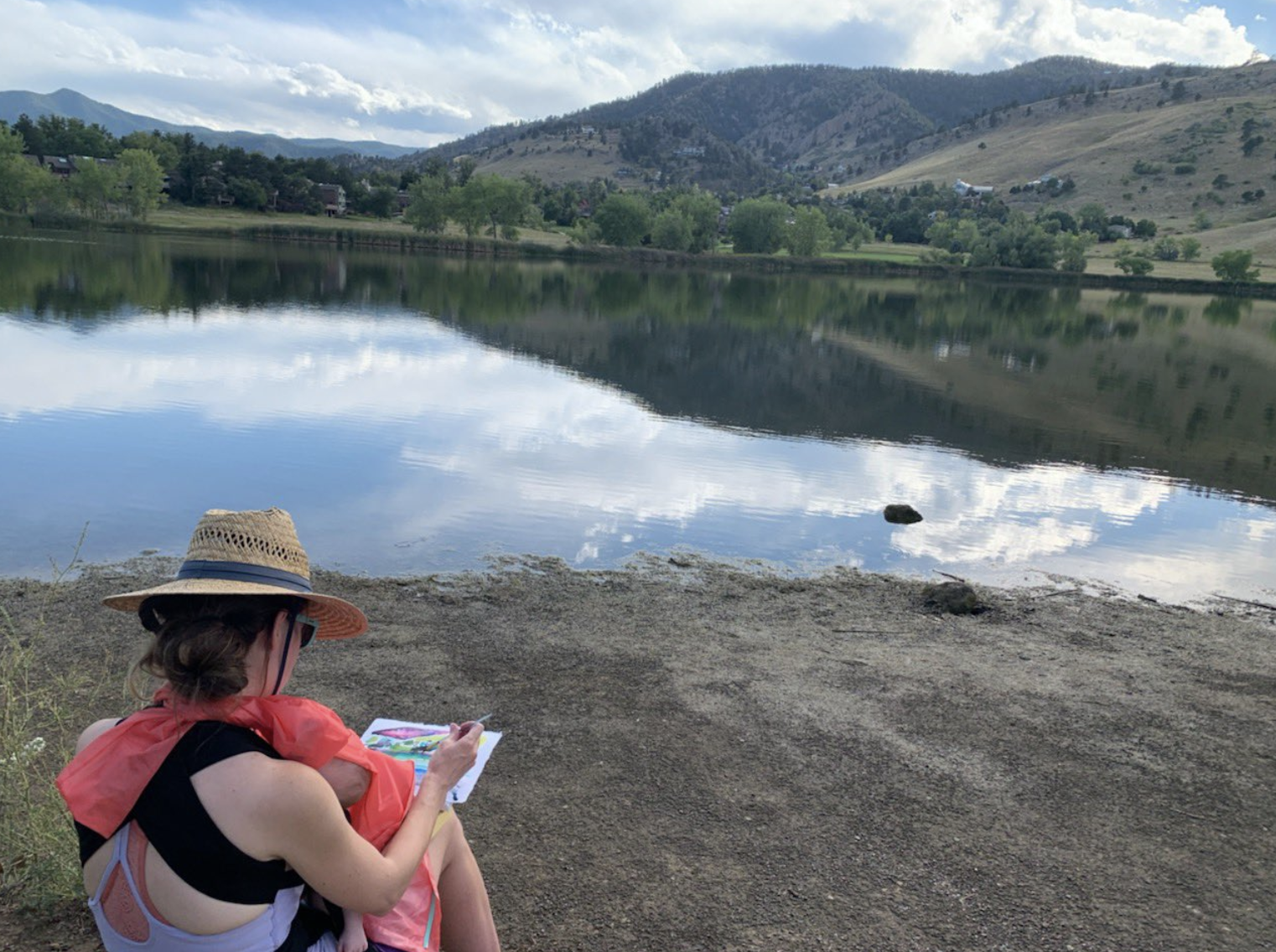
Wonderland Lake September 2023
Here I am with Baby Jewell, my 1.5 month old, getting some painting in! A kind passerby took this photo and sent it to us.
When I think of painting, I think of relaxing. It’s great to get out and just let go. However, I will say that plein air painting is an exercise in chaos management: everything is fine and dandy until the wind comes up and blows dust on the canvas, or when several bees get attracted to the paint colors, or when, suddenly, it rains.
Sometimes I run into animals, or Baby Jewell burps up on my clean shirt, or he needs an impromptu diaper change on the trail. I never know what will happen next! That goes for the artwork, and for the act of getting to a nice painting spot.
There’s so much to prepare regarding bringing the right supplies, and planning for anything and everything. If I plan well and consider tools carefully, almost any kind of chaos can be under control. If I forget a crucial paintbrush or leave behind an outfit change for Baby Jewell, I have an opportunity to learn and do better next time.
Maybe the most important thing I’ve learned in painting plein air with a newborn so far is that the messy process is just as much of a treasure as the painting is once it’s done. The outcome or the painting is (usually) cool, but simply getting outside and going on the journey is an accomplishment. Even if I get dirt in my carefully arranged paints or if I’m only walking for 5 minutes before getting rained on, everything good is in the art of the trip. Each day that I decide to get off my butt and go outside is a good day, and now I get to do this with my best buddy! <3
Like most new parents, I was a little worried about what would happen to my life once I had a baby. Would I still be able to do art? What about my career?
Luckily all of these anxieties have gone away - through taking action, careful planning, and creative thinking, we’ve been able to find harmony together.


I made several paintings I am happy with while at the lake lately, a couple are above. I’ve been using gouache in the Traveler’s Notebook and it’s been going well. While the Traveler’s Notebook paper that I am utilizing right now is meant more for writing than painting, what I do after painting is I flatten the entire book under a couple other books to get any ripples out of each page. If a piece is really good, I consider removing it from the journal to make as it’s own framed piece.

Above is my exciting Art Mom Gear!
Traveler’s Notebook from Two Hands Paperie
iulie watercolors - the best, love these
JMFT Industries mini zip pouch
Himi gouache - within reach pricewise and high quality
Melanzana skirt - get them in Leadville!
Cotopaxi backpack - best colors ever!
A cup from my grandpa’s house
Ergobaby carrier - very comfy for me and Baby Jewell
Huggies - perfecto
You might notice the Himi gouache looks a bit dried out in the photo - it still works great when rewet! And I think it works very well with the iulie watercolors.

I’m very excited about my Art Mom Gear. It’s very heavy and I haven’t put any thought into making a lightweight setup, but that’s ok, I’m used to taking things pretty slow. With Baby Jewell in his carrier and backpack, I carry an extra 25 pounds, and I’m sure this will increase as Baby Jewell gets bigger or if I get some heavier paints or a big sketchbook.
After lifting Baby Jewell all over the place and carrying him across the countryside, I feel very strong. It’s hard to measure exactly how I’ve changed strengthwise before and after giving birth, but I will say that I feel strong, maybe because it has been like I have effectively carried a watermelon around for several months, up and down various stairs and trails. I’m just getting back into running and am taking it slow, running 1.5 miles or so at a time.
More painting on the way! I can’t wait to show what I’ve been up to lately on the trail.

St. Vrain Trail
The Ceran St. Vrain trail near Jamestown in Colorado is very fun! Here are the best of my photos from the trip.


Hiking in mid-September, I thought it was a bit chilly on this trail so I packed my Melanzana running dress fleece and wore a Melanzana skirt as a bottom. I had a lot of painting supplies in my pack and a baby on front so I was a bit heavy and slow moving, yet the fleece was still good to have. I didn’t end up heating myself up too much.
On this excursion we ended up seeing a moose! Before seeing the moose, it sounded a bit like a very large dog howling. I don’t know why my brain didn’t put together what I’d been hearing was a moose, but there you go. If you ever hear what sounds like a very big bloodhound braying, it might actually be a bull moose.
While I don’t have a photo of the moose, here is a video of the moose that I was able to upload onto my Instagram as a reel:
https://www.instagram.com/p/Cilxa7IgJBc/
It was a little scary to see the moose while I was carrying my 1.5 month old, but I figured if I had to, I could have dropped my heavy pack and scrambled up some rocks to make an escape if need be. Luckily, the St. Vrain Creek separated the moose and our little hiking party.

In all I loved this trail and it’s pretty easy to get to from Boulder or from the metro area. It’s a bit chilly and we DID end up seeing a moose so it’s definitely a good place to see wildlife. I didn’t stop to make any art with all the supplies I had in my pack, haha, but it looked like a great place to camp and relax for a few days. I hope to go back there soon before winter sets in!
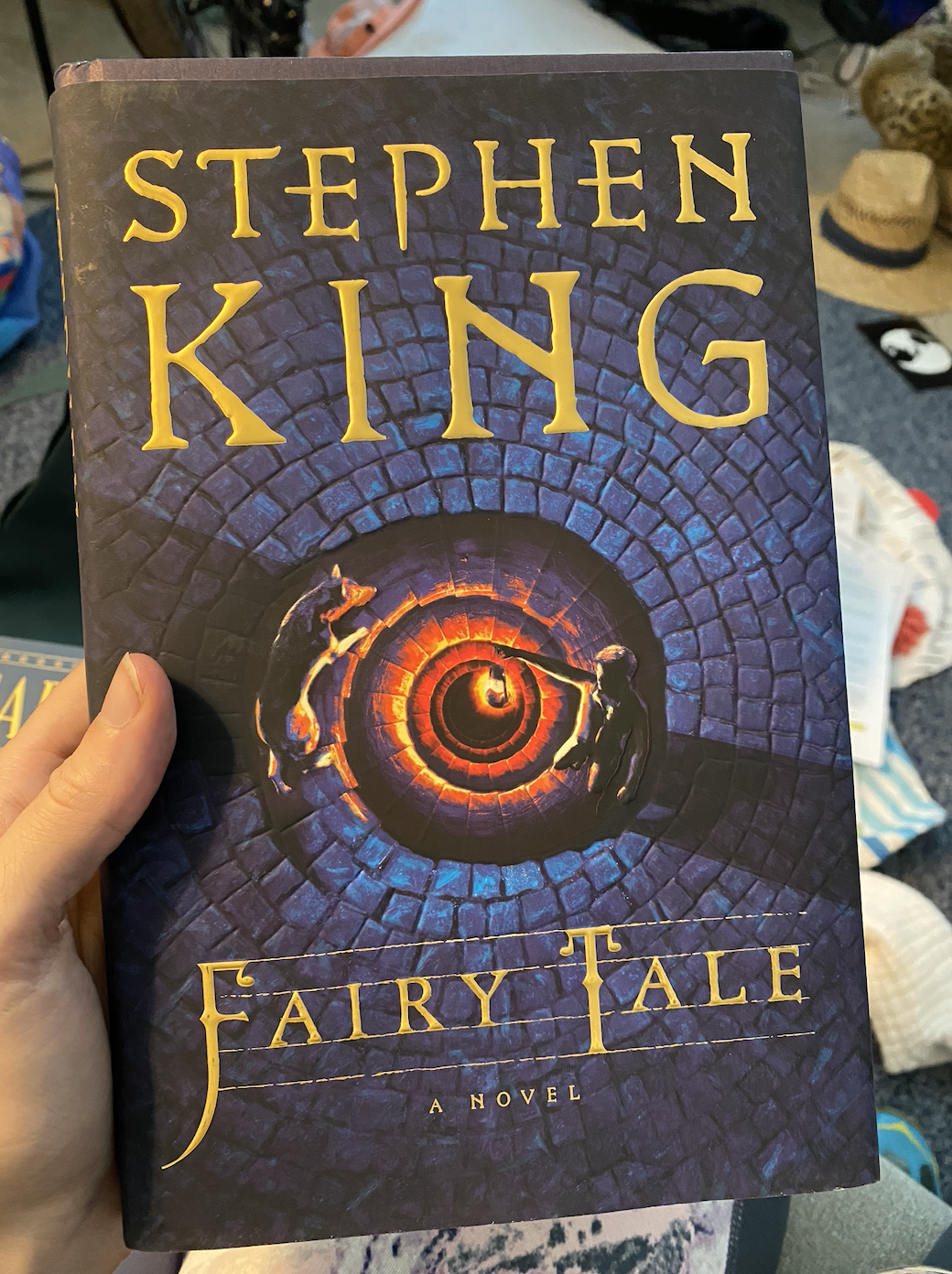
Fairy Tale - Stephen King
I liked this book a lot right off the bat - this book will probably be up your alley if you liked The Dark Tower series and also The Stand - it’s very tethered to a specific American place (small town Illinois) and moves back and forth between our world in America and a fantastic world, elsewhere. Fairy Tale also reminded me a bit of Duma Key, which starts out with a character who suffers an injury and, a fantastic world henceforth is conjured.
I tend to read Stephen King’s books that lean more towards fantasy than horror, but I’ve found that King slips into fantasy more often than not, or his works seem to be more fantastic to me than scary or horrific. I tend to be less afraid while reading his books and more fascinated, a bit like the feeling I got from reading Haruki Murakami’s 1Q84.
Fairy Tale is brand new - it was released last week as of this blog’s writing, on September 6th. The story is about a 17-year-old kid named Charlie, who has a tough family situation and who feels guilt about some ways he has acted out his anger partially due to a bad peer influence. He does something out of character for himself and prays - he makes a promise that if his family life gets better, he will pay it forward, somehow. The rest of the book is about how Charlie gets what he prayed for and he also gets a chance to pay it forward in a fantastic world.
This book to me felt a lot like The Dark Tower only it’s only one book, and it’s just a smidge lighter. I finished it in about a week (I think the Dark Tower took me upwards of a year). I had the funny luck of reading The Dark Tower when I was 19, where the number 19 figures as a superstitious number in the main plot of the story. In Fairy Tale, what seemed relatably closest to my heart wasn’t a number but it was Radar, the German Shepherd. I had a German shepherd growing up exactly like Radar in the story.
Speaking of Radar the German shepherd, I like the illustrations in the hardback version of this book quite a bit. The illustrations provided a bit of a clue about each chapter, which, in the last half of the book, I could barely stop reading because I needed to find out what happened. Each Illustration is by Gabriel Rodriguez
I bought the Kindle version of this book originally but decided I wanted the hardcover for the illustrations. The Kindle version is great but it doesn’t do the illustrations justice (or at least it didn’t on the Paperwhite Kindle that I have)
In King there are so many moments I can relate to, and it’s been that way ever since I read The Stand while growing up in Colorado. and reading so many parts about Eisenhower Tunnel and Boulder. I’ve done some thinking about why and how his books are so relatable to me, and I think I’m not very special in this regard. I think his stories are highly relatable to most Americans, and maybe, most people. Maybe that’s what King does so well - his works are so expansive and his experience is so very American that, chances are, there will be something in his books for every person who knows parts of America, and definitely for everyone who grew up in this country. Of the thousands and eventually millions of people reading Fairy Tale, thousands of us will have had German shepherds just like Radar, and thousands more will say “Oh yeah, I’ve been to that part of Illinois” and also “Oh yeah, my father/high school friends/football coach was exactly like the ones in the book!” Fairy Tale also contains, as one could guess, several references to popular Fairy Tales, but also references to works of literature like HP Lovecraft.
In all this book is a winner for me. It’s the best King I’ve read in a while and the illustrations stole the show!

Hobonichi Techo 2023 - Earthbound Starman
My Hobonichi Techo cover for 2023 are out! I couldn’t resist picking up the Earthbound/Mother “Starman” cover. This cover is rad - on the website it looks white, IRL it’s a cool metallic gray. I was a little worried about ordering a white journal cover and I’m glad it ended up being metallic and sparkly!
The interior is super cute and I can’t wait to start off 2023 with my one-page-per-day Techo planner.

The back of the cover is also fun, and well made - the characters are printed with a mix of indented or embossed color.


There’s also a special gift that you get with this planner, it’s tucked away in the pockets in the image above, but I will leave this as a surprise just in case you want to order this planner!
Good news too - the green Earthbound cover is also back in stock as of right now on the store. The Earthbound/Mother covers seem to sell out soon, so I was sure to order mine early this year.

Greenlights - Matthew McConaughey
I find it fascinating that several celebrity books came out in 2020, or at least, were written in 2020. It’s clear that in many of these books, people wanted to talk about their lives and not just find an alternative revenue stream. In 2021 I read Rick Ross’s ‘Boss Up’ which was written in 2020 and is a bit of an autobiography and a bit of a self-improvement book, which is similar to how Greenlights is structured. There’s a bit about the celebrity, and bit about how readers might apply some of the celebrity’s wisdom to their lives.
The McConaughey book came out in the depths of COVID in 2020, but has less to do with COVID and more to do with his career before that. I get the feeling that it was being conjured for years on end, and COVID was what kicked it out of any remaining nest it was stuck in. For many, 2020 and 2021 were years of “why not?”
The first movie I ever saw with McConaughey was Contact, which I loved as a young person. I think I saw it when I was about 13 or 14, it was one of those borderline PG movies that could have been PG-13 that I managed to see very ‘early’. The most interesting character in Contact is by far the main character, and later on, I thought it was interesting how McConaughey’s character was sort of an antagonist in the film and also a love interest. I hadn’t seen that done in a movie before, at that age. Usually, the love interest is supposed to help the main character, right? Or, the love interest is more like a sought-after thing.
Maybe worst of all, McConaughey’s role in Contact waxes a bit like an afterthought - he’s a very good-looking guy who gets some substance but not much. The book talks about this tendency a bit, as McConaughey identifies that he had enjoyed wild success, yet he was getting pigeonholed into rom-com roles. It took him a lot of saying ‘no’ to break out of getting more and more roles like that, until he got the role in Dallas Buyer’s Club (which also barely got made!)
What I also had to appreciate in this book is when he talks about going to film school, and every other person in film school is a bit serious and maybe even a snob. This was an opportunity for McConaughey to stand out - it’s hard to think of him in any way as being a snob by the time you get to the film school section of the book.
Before reading this book, I had no idea how much he traveled. I will suspend any further commentary on this, it’s fun to read about his travels in the book and why he goes to the places he goes to.
In all, I enjoyed this book. Like reading biographies of other celebrities, there’s more than what meets the eye to this particular actor. I found the most interesting parts of this book to be his biography, but others might enjoy the poems or asides, or the images of his writing throughout the years.

Leading from Anywhere - David Burkus
What is nice about this book is it made for all of us living in 2022. It’s fresh and awake to our reality with COVID-19 and it knows it’s coming after books like ‘Remote’ and other work-anywhere books. ‘Remote’ is, dear god, more than ten years old at this time, and while it’s a great book, the more books we can get about this topic, the better, in my opinion.
Instead of reading like a manifesto that says “This is why we should play football”, this book says “We are all playing football now because football is fun, here’s our playbook”
This book is good to read after Jason Schreier’s “Press Reset” where game developers move their families across the countryside and sign their name to mortgages to work at game companies, only to have the company fold within a few months of time (sometimes a few weeks or even shorter, too). Given the strategies in “Leading from Anywhere” and the horror stories in “Press Reset,” in the near future, working in an office may look like a form of enforced insanity to many people. It’s 2022, we have incredible machines which help us communicate at lightning speed, we can manage projects and campaigns without a single piece of paper. Commuting for one to two hours each day just to talk to Fred from accounting seems like move backwards, like using horses after everyone else in the entire world has a car.
It is 2022 and yet, there are still people who use typewriters even though we have word processors. There are people who, haha, walk around the countryside and paint landscapes in oil even though cameras have been invented. And there are people who ride horses to get to work. In the most glorious future of work, going to an office will be like the typewriter, the easel, and the horse - something that is special instead of everyday.
What this book does well is it knows exactly what it is and who its audience is. Leading from Anywhere is a book that does exactly what its title says. Yet I would argue that this book is not exclusively for leaders, managers or CEOs. Anyone at any professional level would benefit from reading this book, because there are tips on ways to connect with people even without being nearby them. Give it a read if you’re a leader working from home or if you’re working from home at all.
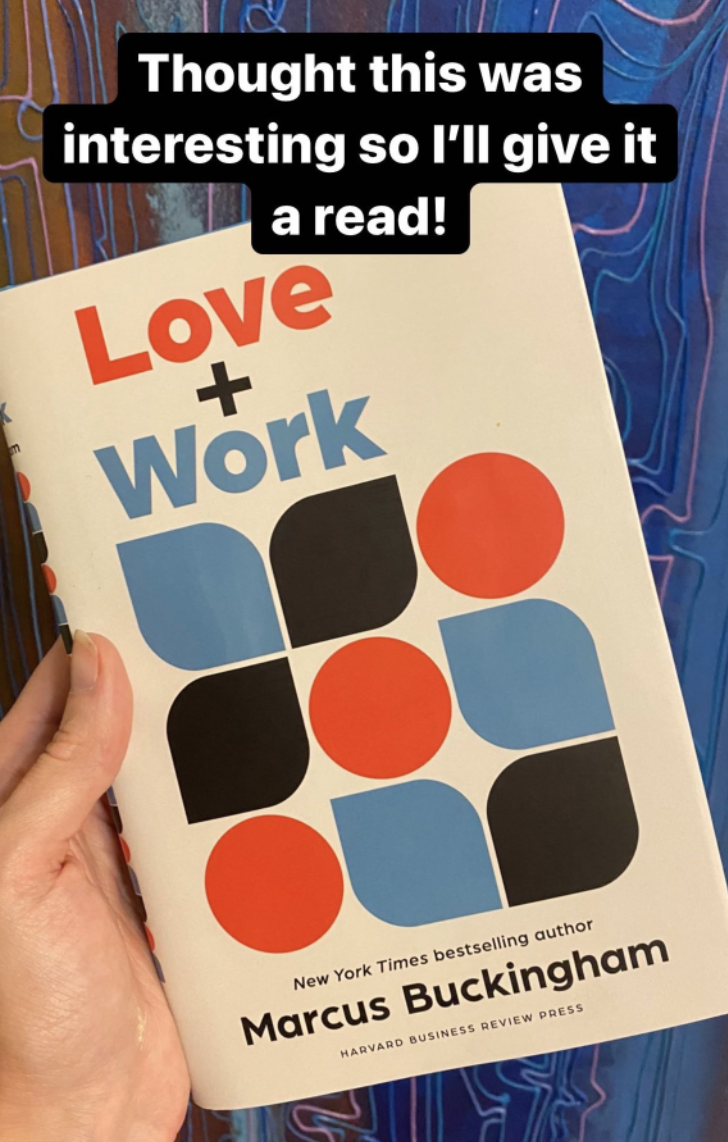
Love + Work - Marcus Buckingham
I thought this book was, overall, very sweet and optimistic. It has the funny fortune of looking like a hustle-culture book and being very against hustle culture. It is a book to dispel the workaholic in us who works for the wrong reasons. Like carefully confronting someone who is about to marry for money and not love, this book is a moment of realignment for anyone who has worked too hard and done whatever it takes to get ahead for the wrong reasons.
And wow, this author has a very personal reason for writing a book like this. I don’t think anyone on the planet could have written this book for a better reason.
At one point about 2/3rds of the way through the book, the author Marcus Buckingham talks about going through a divorce. He says something along the lines of: "… A year later, my ex was involved in a scandal that got nationwide attention..."
Not one to waste time, or, because I can’t suffer hardly any kind of suspense, I put down the book for a moment and googled Marcus Buckingham and ‘scandal’, and his ex was one of those women who was involved in the College Entrance Cheating scandal, where his ex-wife paid to have a person take an SAT test for his 18 year old son. (Marcus Buckingham claims he and his son both didn't know about these actions at all at the time.)
For this reason the last half of the book is the most interesting, and as a reader I could see why Buckingham wrote the book. If as a culture we are doing whatever it takes, cheating, bribing, to get our kids into schools, why are we doing this? The end of the book is about how schools, GPAs, SAT/ACT, have leeched not just personalities out of kids, but have taken away kids' abilities to find work that they love. Instead, most of us around here just try to make it through various biased systems, and some very wealthy people don't even let their kids try to get in to Ivy Leagues on their own.
In the end, this book was a lot more meaningful than I thought it would be, I thought it would be just sort of another "How to run better meetings" kind of thing, but it turned out to have this incredible personal story where this guy left a marriage on some sort of strange intuition, and then his ex did this desperate, dishonest thing for their kids. Overall this book is a wakeup call, a sane person in your life giving you a bit of a shake out of hustle routine and saying “What are you doing??”
I’m not sure if there are tons of solutions for desperation, overwork, and get-aheadism offered by Buckingham in this book, but it’s a start. I’m glad it was written. Even if Buckingham seems like a shocked bystander to what happened to his own family in the College Cheating Scandal, he comes out of the experience with a book and a gentle message. What I got from this book most of all was this message: Winning at your career, at school, at life itself is not worth it if you never loved the game enough to play fair.
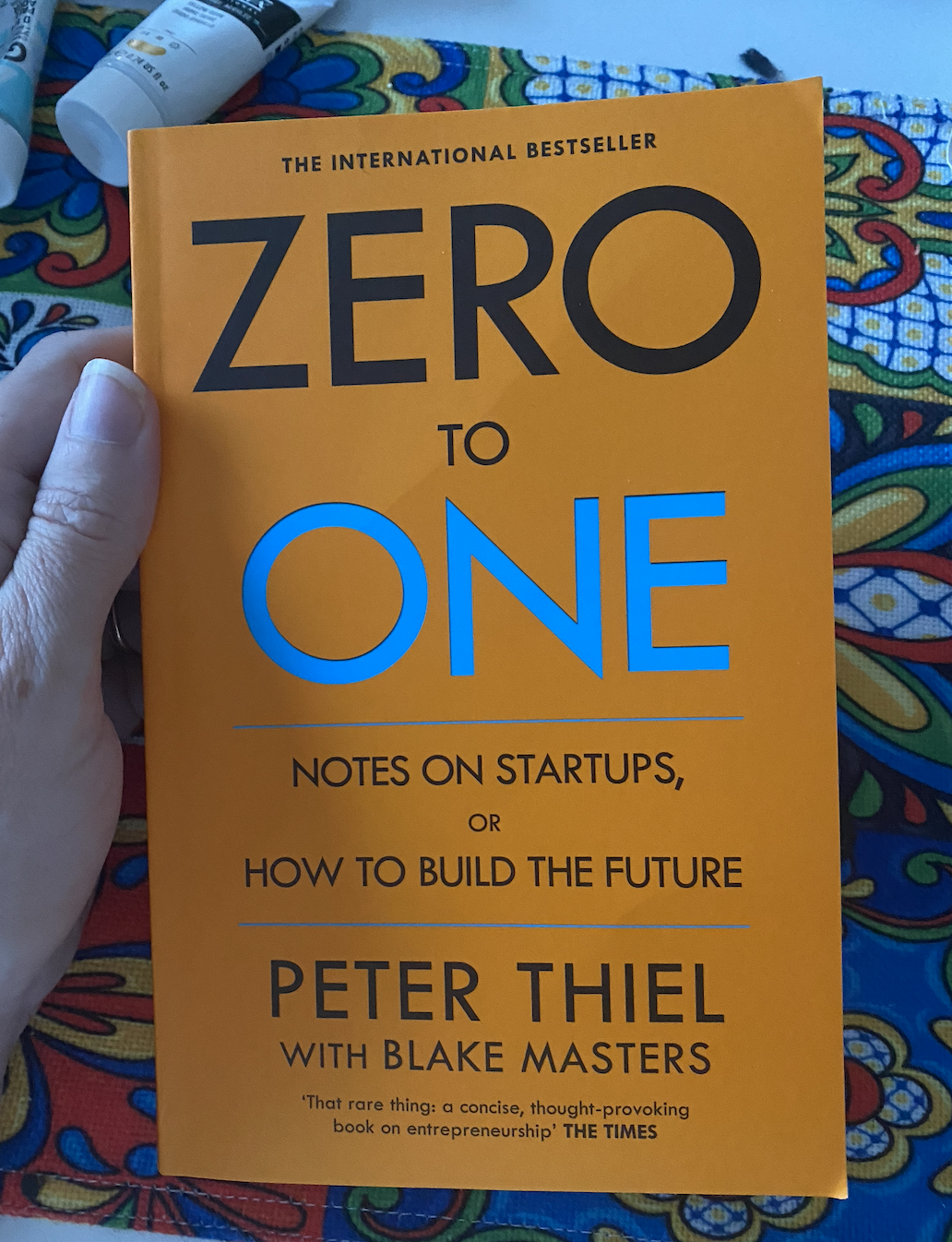
Zero to One - Notes on Startups or How to Build the Future - Peter Thiel
Like any billionaire, PT can be a divisive figure. However, I don’t think PT’s business acumen is that bad, and in this book he does have something I can agree with: optimism in general and optimism for the future. The book is an assemblage of notes from a course he taught at Stanford. The introduction states that Blake Masters was a student in that course who took dutiful notes, which have turned into this book. It does read a bit like a series of lectures.
Reading this book in 2022 is still a useful thing to do but it is very clear that the book was written in 2014 or so, which can feel like forever in tech years. There are still strategies that will work at startups, they simply worked very well when they were brand new and PT put them to work 20 years ago - namely the ‘pay customers to sign up’ strategy of Paypal, where customers get money just for making an account. This strategy still seems to work, as I see it being employed by Venmo (also Paypal, haha).
The parts of this book that stand out to me the most are moments when PT talks about other books or other writing, namely, when he mentions the Unibomber’s manuscript and also Ayn Rand’s work at the very end of this book. PT sees the Unibomber as someone who is nihilistic or who doesn’t see any kind of work worth doing, and he sees this mentality as, rightfully, dangerous. In terms of the other writing he discusses, surprisingly, it didn’t seem like PT was praising Ayn Rand in the end, he saw fit to virtually end the book with a criticism of her as a person who created all villains and no heroes.
To sum up, I didn’t think the ideas in this book are bad. From what I’ve seen, the way in which PT directs the flow of his enourmous wealth is highly criticized, yet I don’t often see his ideas or strategies similarly criticized - because ultimately, they seem to be decent ideas and strategies.
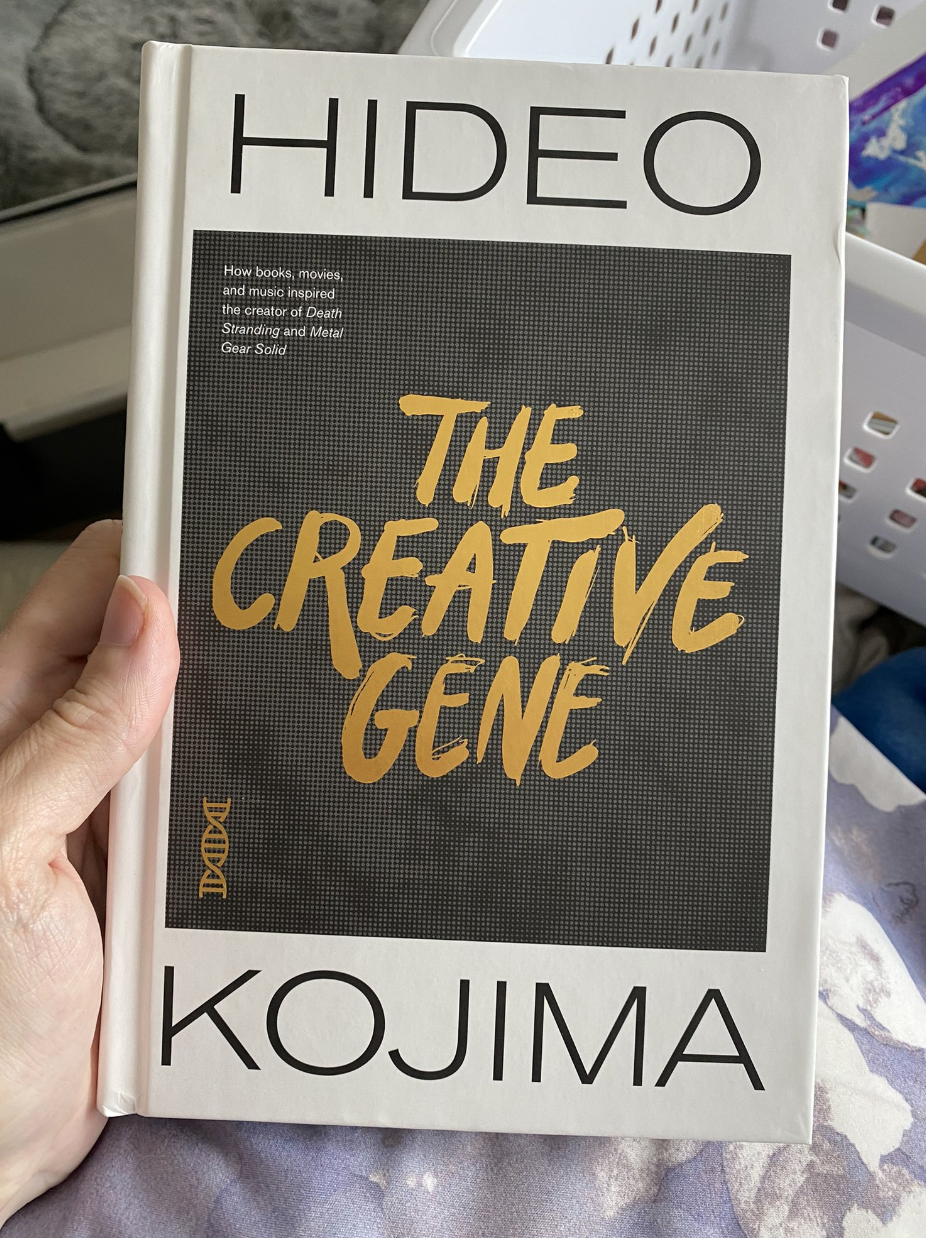
Hideo Kojima - The Creative Gene
At first I thought this book would be a standard nonfiction book - it’s formatted a bit differently as it is a collection of short essays about books, movies, and manga that Hideo Kojima likes, and what he was thinking and doing at the time of reading or watching each work.
After reading this book, I decided to buy 8 issues of 2001. I didn’t know anything about this comic until reading The Creative Gene, and I want to read at least a few of the books mentioned here, so I figured the comics would be a good place to start. The Creative Gene will probably work in the same way for most readers - you’ll see books and movies that you recognize and books you’ve never heard about, and some of them you’ll want to check out.
I have a theory that the most exciting people we meet in life open doors to other books, movies, and comics. In a way, this book opened the door to other books for me.
Many of the Japanese book titles were brand new to me or I had never heard of them, which makes sense, and I appreciated learning more about them. I wasn’t sure if these titles were as obscure in Japan as they are to an American, or more popular in Japan than I realize.
Still, the book contains many titles for a worldwide audience to appreciate - references to Stephen King, Columbo, Taxi Driver - all of these show up in this book of books.
What was also fun to learn about in this book was Kojima’s reading style. It turns out he goes to a bookstore every single day. It sounds like for the most part, Kojima goes into the bookstores without looking for anything specific, and he comes out of the bookstores with a book each time, something he didn’t know he would be getting.
Near the end of the book, Kojima goes into some TV shows he really liked and mentions how the commentators made the shows relatable and special. He talks a bit about how critics and commentators are different. It’s easy to see Kojima as a commentator, not a critic, in The Creative Gene.
In all, I liked this book a lot and it was a new concept for me, a “book of books”. I wish more creative people made books like this. It’s a fun and insightful window into the world of Kojima’s influences.
Paper Hummingbirds
Lately I’ve been making paper hummingbird collages using handpainted yupo paper, watercolor paper, and other painted papers. It’s been really fun! I will assemble a few collages while taking care of my newborn.
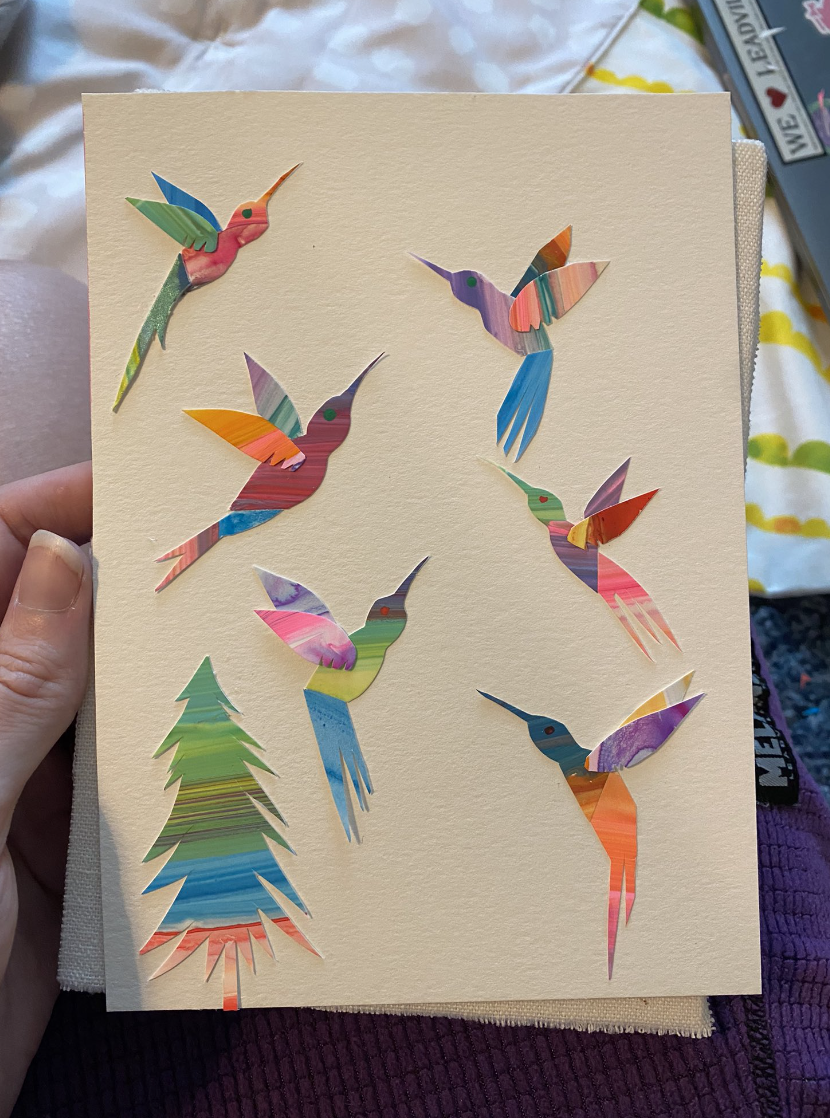


Once I had a few collages like this finished, I uploaded a few designs of the collages to my shop on Society 6.
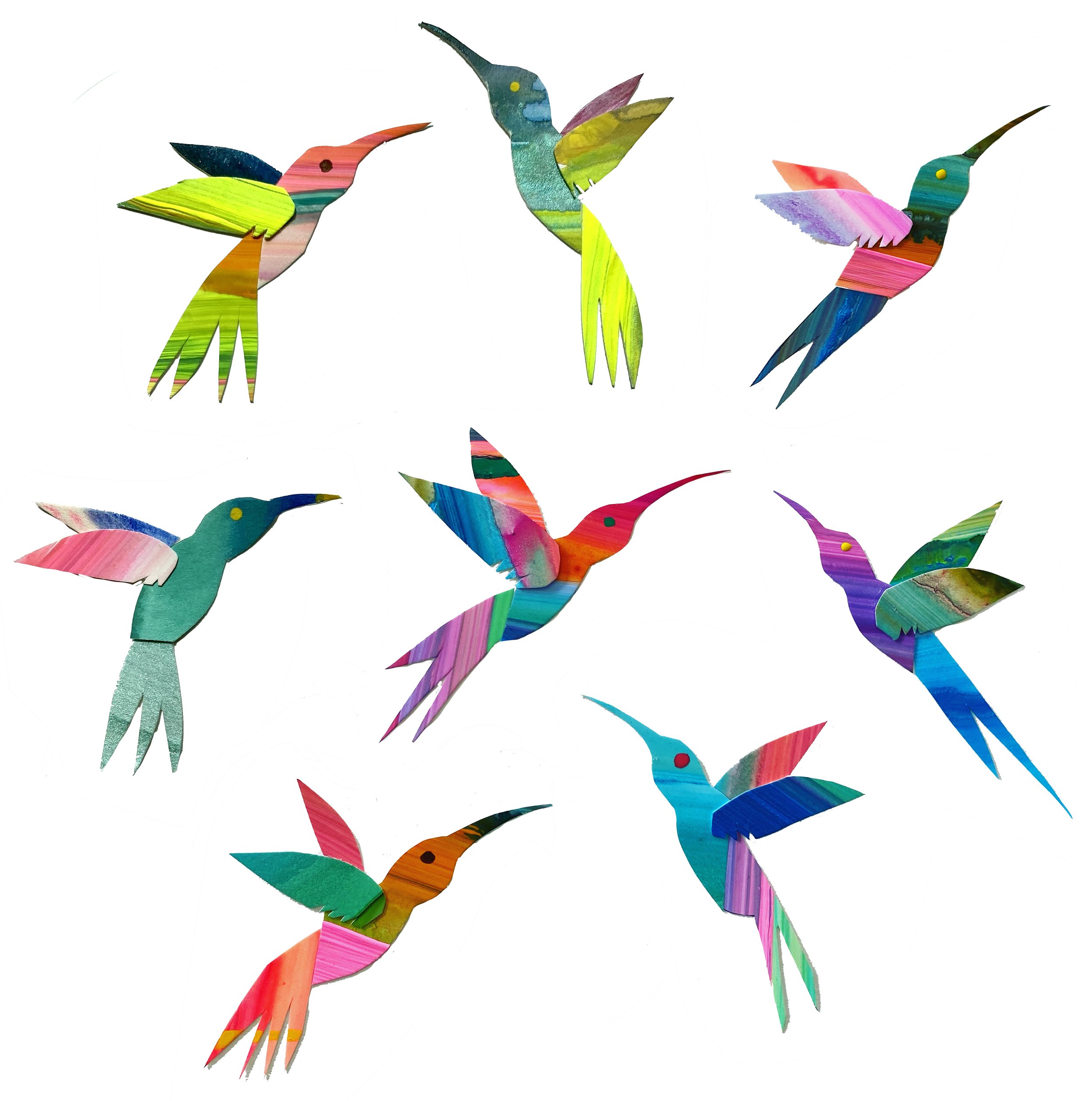


Ask Iwata - Words of Wisdom from Satoru Iwata, Nintendo's Legendary CEO
This is a really sweet book with simple principles for bringing more happiness into the world.
I won’t spoil them, but the book also has a couple anecdotes about the development of Earthbound, which I found interesting and hadn't heard before. Earthbound always struck me as quite a different game from others, and part of the reason why might be explained in this book.

The Hobonichi Earthbound cover and the Ask Iwata book go together pretty well!
This book was interesting to read after the Reggie Fils-Aime book, and in reading both, it’s easy to see how the different strengths of each leader contributed to making consistently interesting products come out of Nintendo. Iwata acknowledges the power of disparate strengths in the book.
I like to make a study of Nintendo as a company because the feelings of happiness I’ve received from Nintendo games have been so consistent throughout my life. The way I see it, an organization that makes such touching games has to have some principles driving it, principles that care deeply about people having fun and being happy. It’s not simply that Nintendo creates quality devices and products, it’s that the quality products also contribute to so much joy and happiness that I find them worth studying, to the point of writing these blogs and discussing the books when I get the chance. Apple is a company that puts out quality devices, but does it always make people so happy? The same question could be asked and answered in the same way for dozens of game and technology companies.
Here is another simple statement from Iwata:
“What makes work so interesting is the chance to meet people driven by anger and people driven by happiness”
The book is full of simple statements like the above. I found this to be very refreshing. There’s something very humble and also very direct in the writing style here.
I also liked the simplicity of what Iwata had to say about drawing:
“A person who likes drawing is going to draw regardless of whether anybody asks them to, and people will praise them for that. As this cycle continues, they’ll get better and better at drawing.”
A key takeaway from this book for executives and managers is Iwata’s leadership style of interviewing each person at his company twice a year. It sounds a bit like a performance review, but it’s more of an interview. I thought this strategy was very refreshing, and it worked to keep Iwata close to the people he was leading.
Ultimately this is a good book, it’s a short read and has many anecdotes to enjoy upon a second look. Ask Iwata is one of those books that is good to read in full and also take off the shelf from time to time to revisit. Open to just about any page and you’ll find a simple, compact statement about life as a leader or a designer.
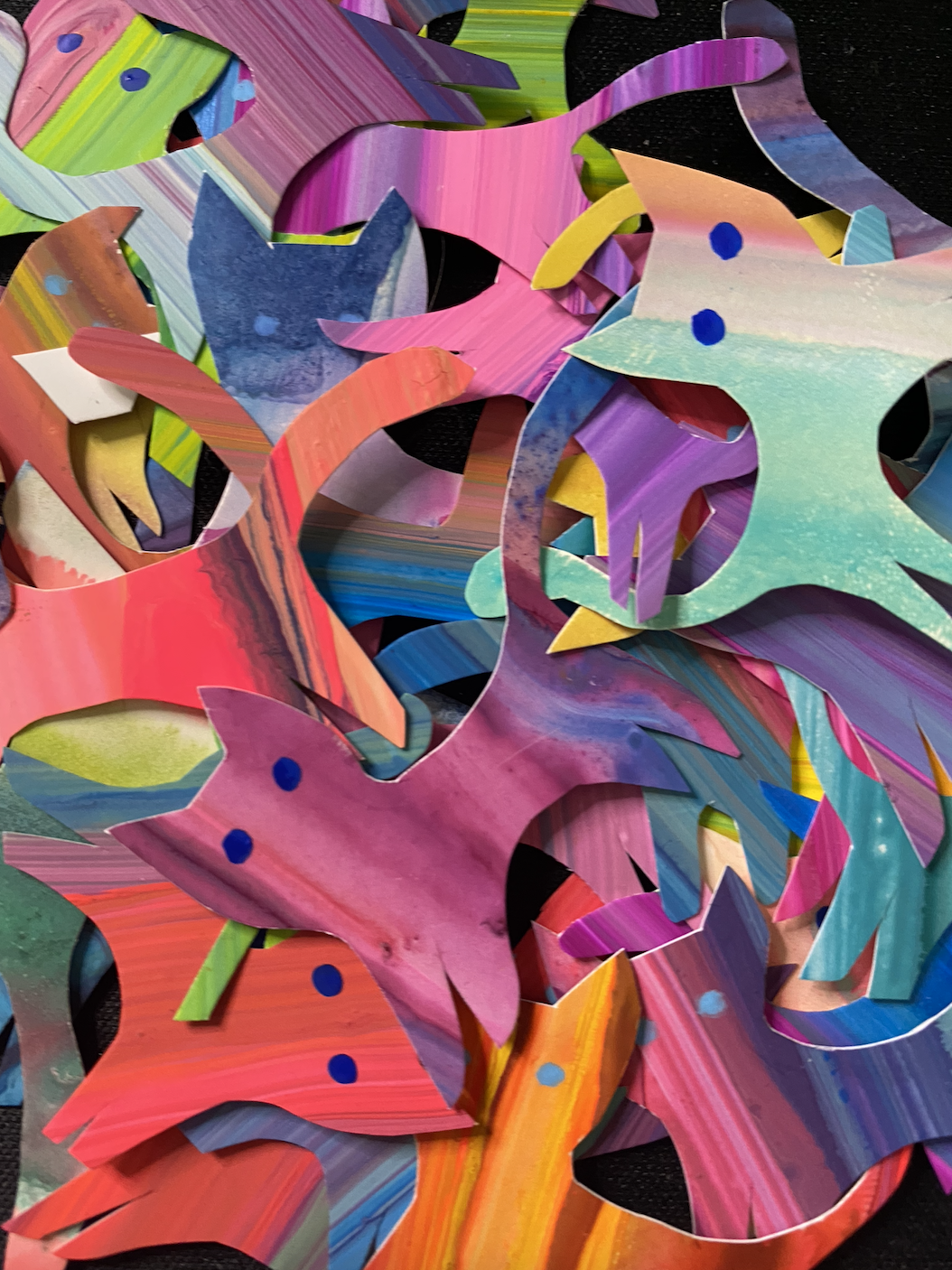
Cat Collages
Lately I’ve been getting into making more paper cat cutouts! Here are some of them


Ultimately I put these into bookmarks

Products with these cat patterns on them can be found on my society6 shop:
And tons more!

Hiking at 37 Weeks!
Hiking Mama: Hiking during late pregnancy
Hiking has been a fun and exciting thing that I can do in pregnancy.
I fired off a couple runs in the first trimester and quickly lost steam after that in the second trimester as far as running. Running around with a baby bump just didn’t feel right for me, though I did get the second wind that many women talk about in the second trimester. It was a good time to do tasks like organizing and moving and nesting.
In the third trimester (as we speak) I feel energetic but not like a power woman or anything, so, hiking and walking have become my favorite activity.

Hiking at 36 weeks
It’s been useful to get a pair of hiking poles and use the poles while on my hikes. I need to go slowly to hike, the poles help me with balance as I have gained 40-50 pounds and I gained at least 10 of those pounds in the last couple weeks of the third trimester. It’s not easy to balance with such rapid weight gain, my brain isn’t used to how difficult it will be for me to do things like crouch and get back up again.
For some, I hear it can be embarrassing to use hiking poles, because some of us associate poles with canes, but I figure that pregnancy itself can be the same way if we let it. I find it is much nicer to be out and proud with my belly and to be unapologetically pregnant and wielding poles. This is where I would insert a shrug emoji but I don’t know how to do that on this website, haha.

Another 36 weeks photo from an amazing hike near Brainard Lake
For the most part, I stick to flat terrain or terrain with gradual inclines. If something is too steep, I won’t do it.
Something that is kind of funny is that being pregnant and hiking reminds me a lot of hiking around with my painting easel - it’s a big unweildy thing that sets off my center of gravity in ways that can be tricky to deal with. Fortunately for both being pregnant and hauling an easel across the land, developing and maintaining core strength is something that can help with both. It sounds weird to want to keep up with planks in order to just, walk, haha, but it ends up being useful.

Hiking at about 35 weeks
I am able to hike up to 5 miles, and while it sounds like a lot, I go pretty slowly. The 5 miles might take me 2 hours to do. The important part is that I am getting outside and getting the miles in. And, on many days, I’ve only been able to have time for 1.5 miles or even just 1 mile up and down the road.
I’ve gained quite a bit of weight during pregnancy though it may not look like it - before pregnancy I was usually weighing in at around 130 lbs, and in these final weeks of being pregnant, I am more like 175 and at night, 180. My height gives me a bit of a pass, as gaining 50 pounds across 5’11 doesn’t look like 50 pounds on someone not as tall. And fortunately, most of it seems to be purely the baby and blood volume or water weight.
But, I would have lost more of my fitness levels without hiking and walking. Weight is one thing, but losing my previous levels of fitness any more than necessary would be a bummer.
Finally, what I’ve loved most about hiking while pregnant is that it gives me something to see and think about that is beyond my computer, my art, my work, or health. I turned out to be one of those moms who likes to google just about everything in my early trimesters, causing me a bit of anxiety at some points. When I get outside, I don’t have to worry about anything - it’s nice to just look at rocks, plants, and landscapes and think about those, instead of whatever battery of tests and appointments that I have coming up. (Though, I am grateful for modern medicine and all of those tests, too!)

So, I hope this blog has helped share some of my love of hiking with you!
To sum up, here are my Hiking Mama takeaways:
Flat and shady terrain is great
Hiking poles make everything 100% better
Time doesn’t matter, just getting it in is enough!
The mental benefits of hiking are as good as the physical benefits

Medium Moment: Coliro Iridescent Watercolors
To get started with using these iridescent watercolors, I thought about different animals that had iridescence in their plumage or scales. The animals I decided to paint first were hummingbirds and also fish - each creature has a kind of shine to it that matches the properties of the medium.
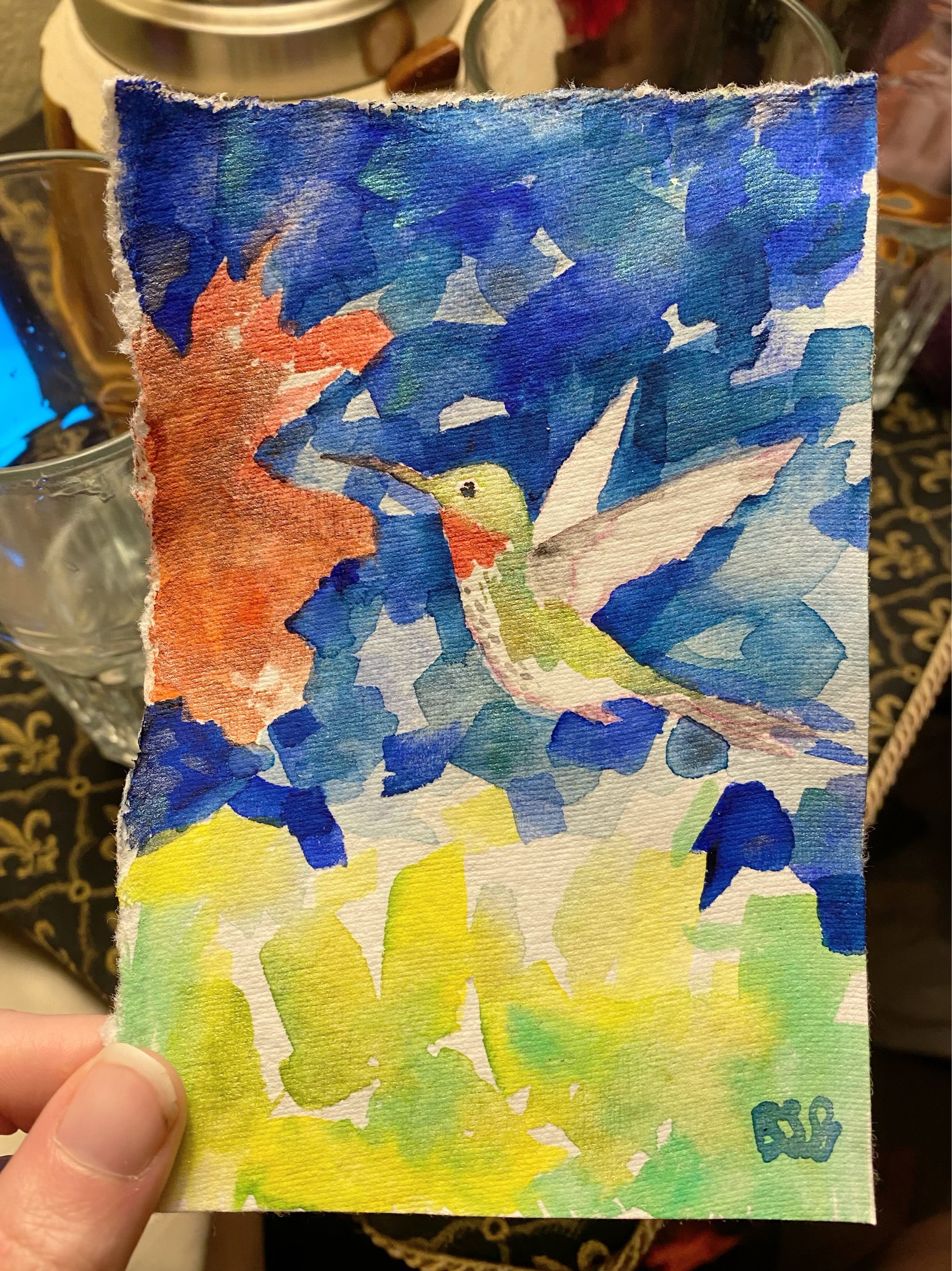

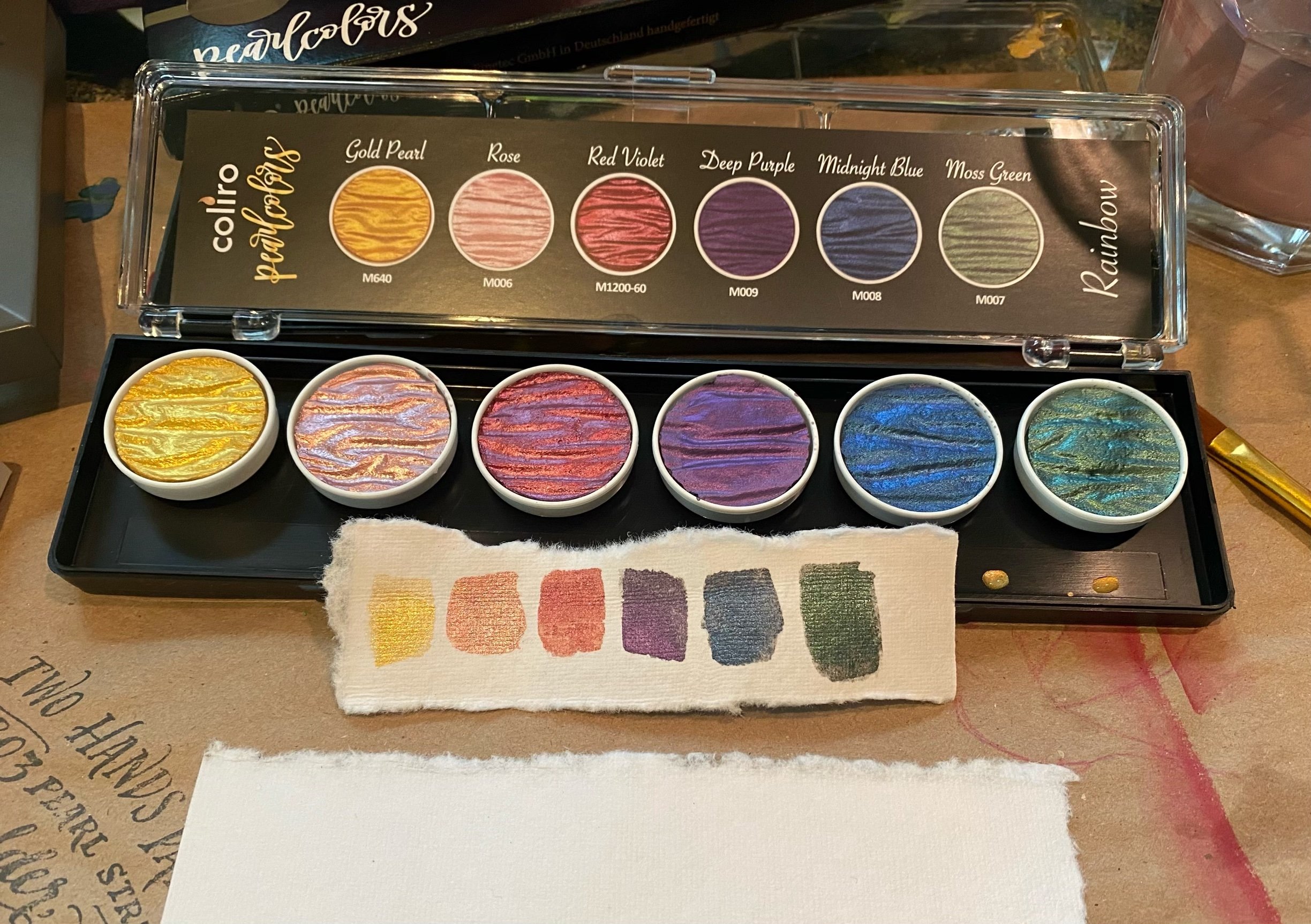
For me personally, it is fun and useful to make palettes of what each color looks like like in the photo above. This helps me understand what the colors look like on paper - sometimes it can be a bit of a surprise but with these particular colors, there’s nothing too shocking. Coliro also provides palette examples of what the colors look like on both black and white paper.
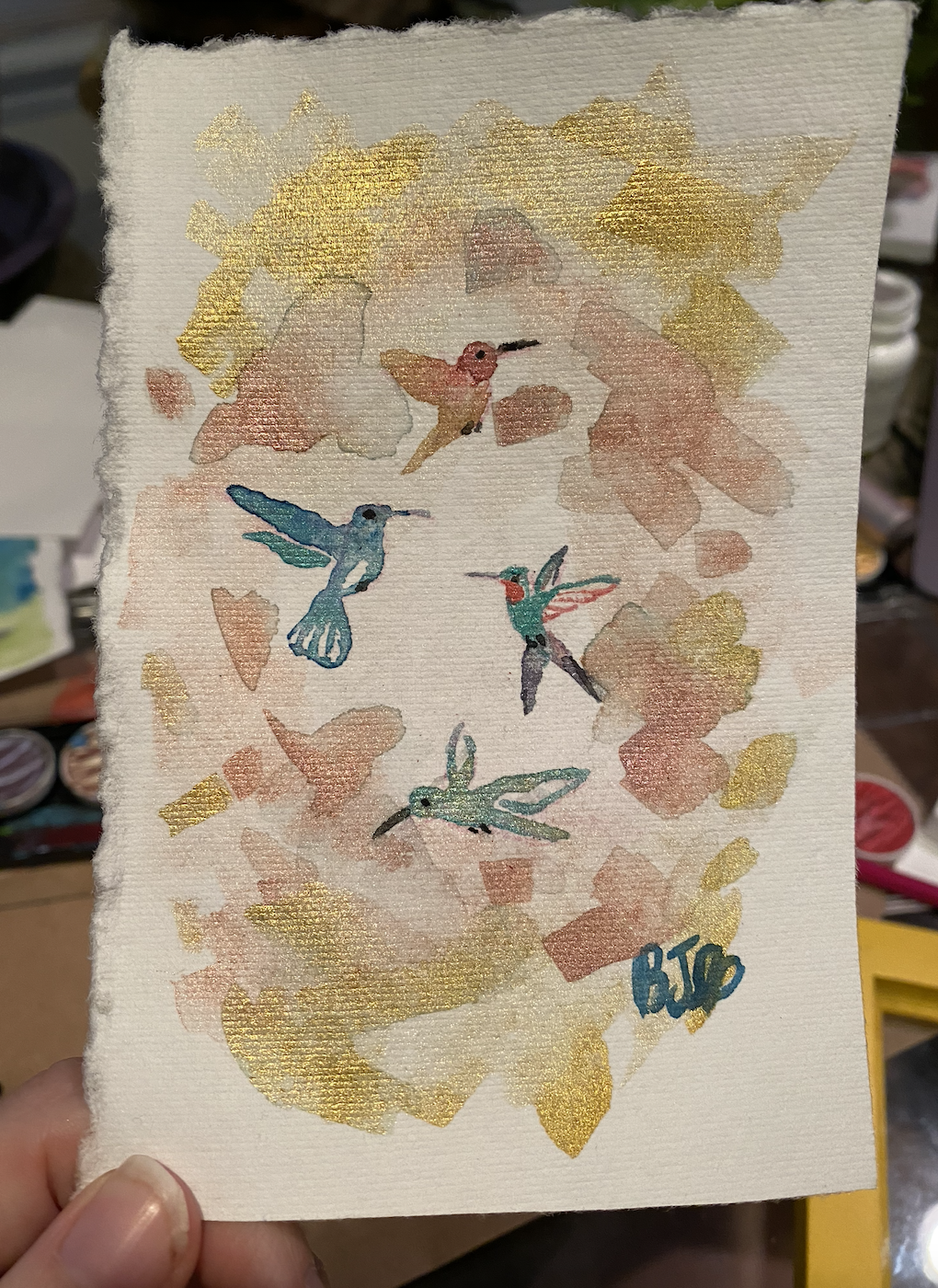
Depending on the lighting, these watercolors photograph a bit differently and I found it was a good idea to take photos in different lights, different times of day.
The particular paper that these watercolors are on is handmade paper made from recycled t-shirts, and it has a decent amount of tooth and depth - the pressing on the paper resembles canvas, which creates extra texture and shadows.


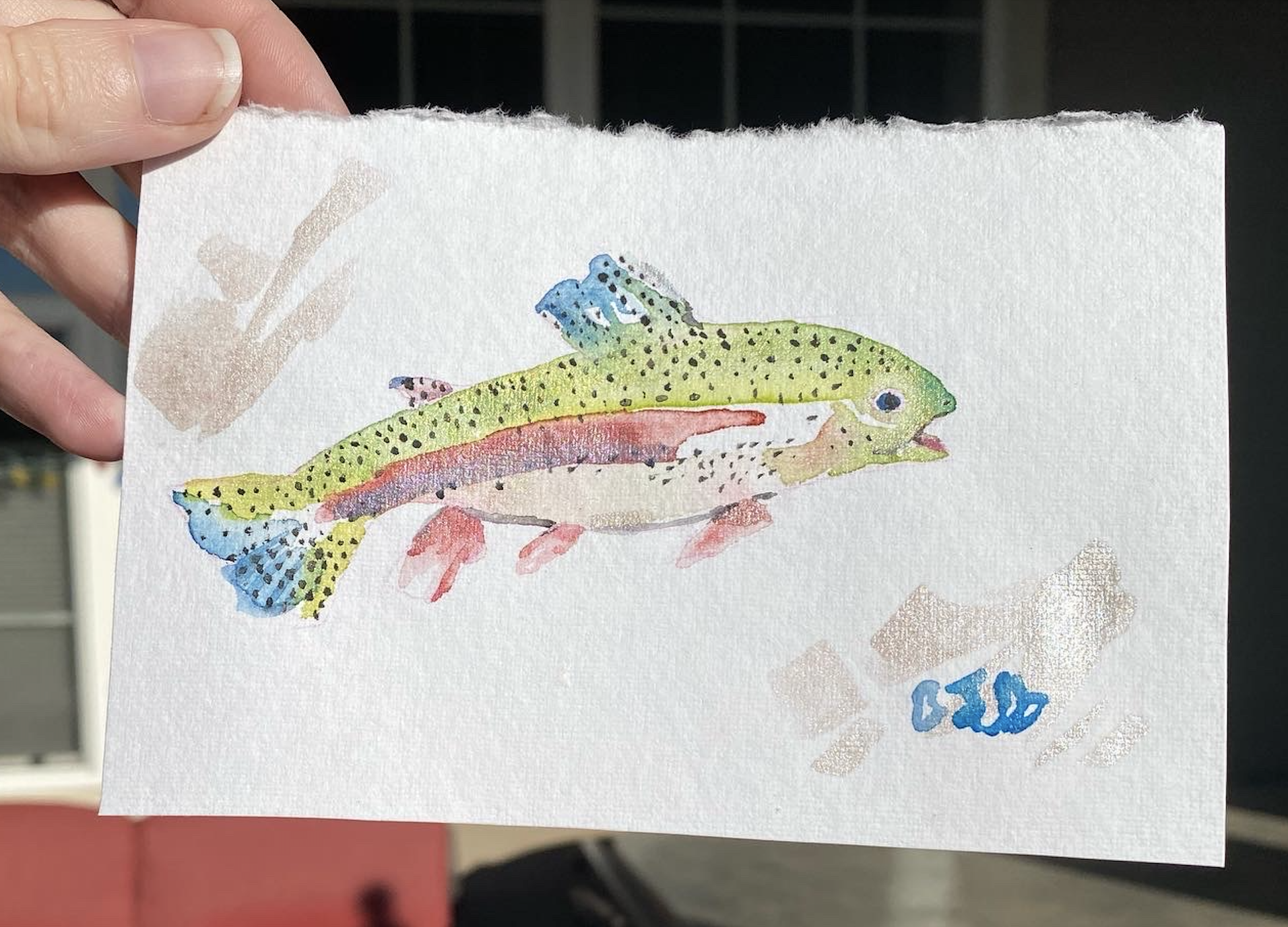
In different lights, the light may or may not fill all of the tooth on the paper, and this can affect the way the iridescent watercolors look.
I made a second, larger rainbow trout with almost exclusively the Coliro Iridescent colors - the only color below that is not Coliro is the black for the fish’s eye and spots.

Overall I really like these watercolors and I think they are definitely worth trying. I bought 2 sets and also a couple singles for palette diversity’s sake. The colors also mix and layer well with other watercolors and gouache paints.
Starting my Journey With Watercolor
About a year and a half ago I stopped oil painting and moved over to gouache. I was a bit overwhelmed by the amount of solvents that I personally utilized to oil paint. Have you ever gone into a polluted area and felt that it would be very bad for your body to stay there, like you could feel an accumulation of bad chemicals in the air? That’s a bit how oil painting made me feel at the end. I was in love with the textures and colors, yet I couldn’t shake the feeling that oil painting was bad for me or my future self, and that my health would be better if I stopped doing it.
To add to this act of self-preservation, in November 2022, I knew I was pregnant and my decision to stop oil painting a few months earlier helped me feel even better about my choice. I read countless blogs and articles on what doctors thought was best to do with painting. It turned out that many of the posts and articles I read agreed that oil painting should be avoided during a pregnancy, and watercolors and acrylics were much better mediums for moms-to-be.
In pregnancy it seems like everything that is near my body needs to be double-checked. Everything must go through a sort of pregnant-lady TSA. Foods, and even cosmetics that I love, or beauty treatments, are highly monitored and are recommended against. This is all well and fine to me, being a person who has already stopped drinking a few years before, giving things up has been easier than I thought it would be. I think most moms-to-be are prepared to give up things like alcohol, but what surprised me was … some sunscreens aren’t okay to use? It all seems very good to err on the side of caution.
The caution of pregnancy around paints formed an opportunity to revisit an art medium that has always, always, always kicked my ass. It confounded me as a teenager. I tried it again in my 20s but couldn’t make anything meaningful. Somehow, working with acrylic ink was easier. Oil painting was way less daunting.
That ass-kicking medium: watercolor.
Aside from reading blog after blog about watercoloring instead of oil painting during pregnancy, what helped me get better with watercolor is something I’ve always loved: reading. For me at least, and maybe for others, watercolor is not the sort of medium that one can just squeeze out of the tube and produce masterpieces. I had to read a book about it and educate myself on techniques, steps, paper types, and more.
The book that got me feeling confident with watercolors was this Jean Haines book, which I picked up on a lark at Barnes and Nobles.

I find Haines’ writing in this book to be very compelling. She describes exactly what she does and she talks about materials and brushes too.
What also helps is that there are thousands of youtube videos out there on watercolor, yet, I think the Jean Haines book is still very valuable, because she is so articulate about her painting. She has a whole series of books, and I picked this animal-based book because the topic seemed approachable to me.
It is hard to find people in life who are highly skilled at something and are also able to communicate very well about their skill. I find this to be true in many sectors, from tech to painting, to topics like mechanics and dentistry. This is why I appreciate Jean Haines’ work and her writing so much.
For my first watercolor in many years, I made this picture of Geddy:
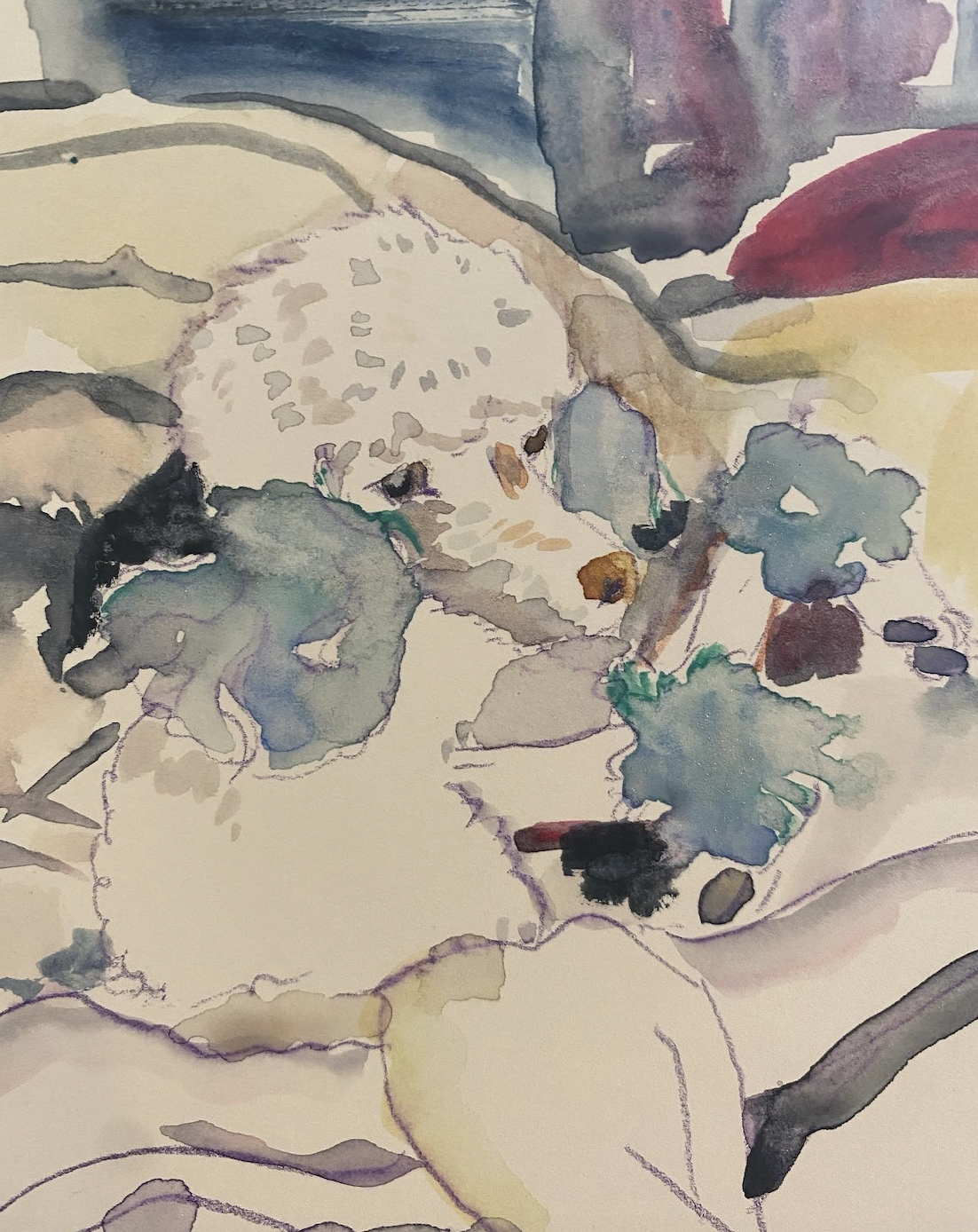
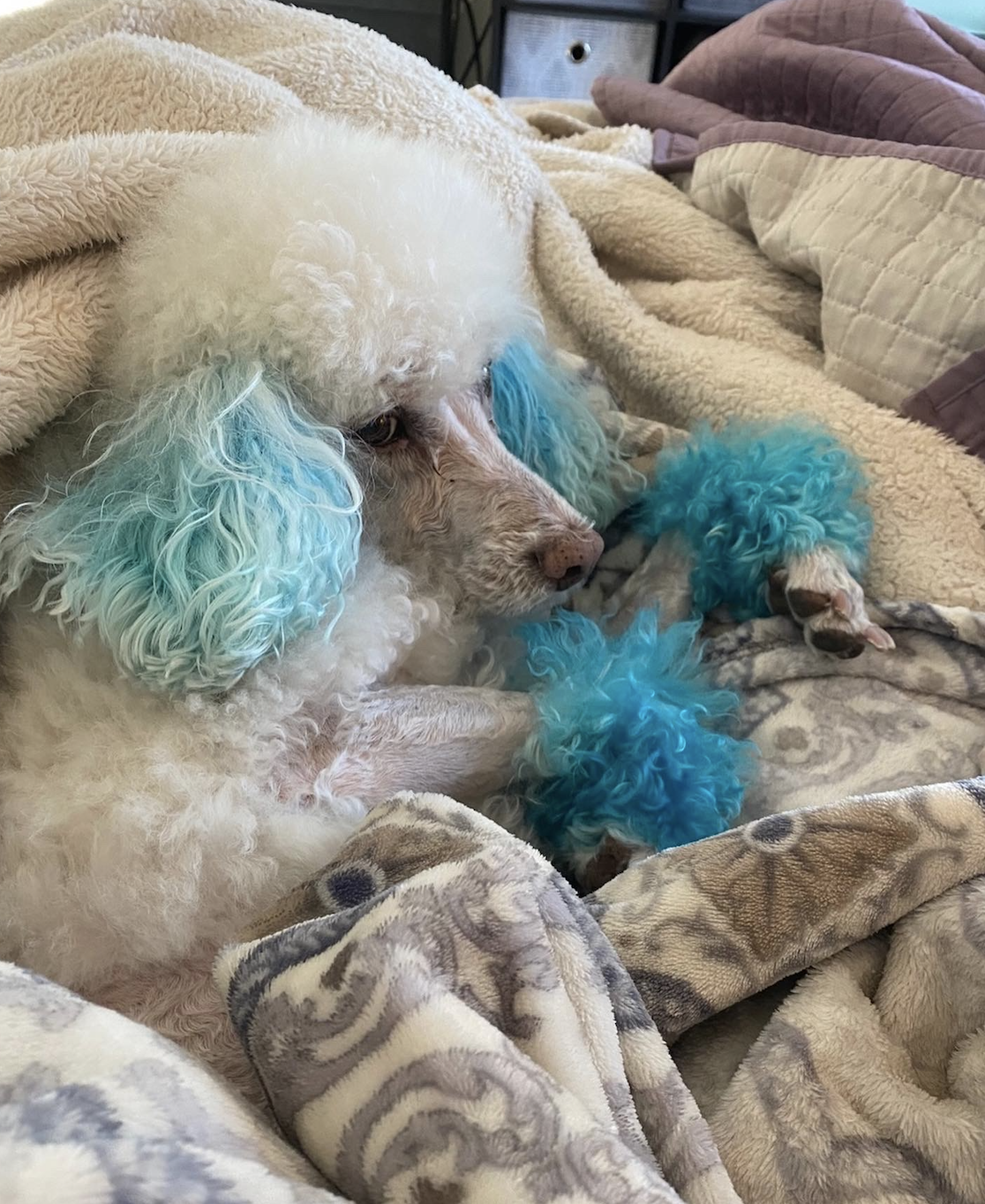
I am pretty happy with this painting of Geddy. I see a lot of opportunities to improve, also. What I thought after making this watercolor was that it would be a good idea to paint something that isn’t predominantly white. Even though Geddy has some blue fur and has pink undertones, he doesn’t make for the most exciting painting subject unless he is against an exciting colorful background. (sorry Geddy!)
So, I moved on to mountains and flowers.

For Memorial Day, I painted these poppies. This was very fun to do, and I used different watercolors than the ones I used for the Geddy watercolor. The paints I used are the Yasutomo Sumi-e Watercolor set - I got them at Guiry’s.
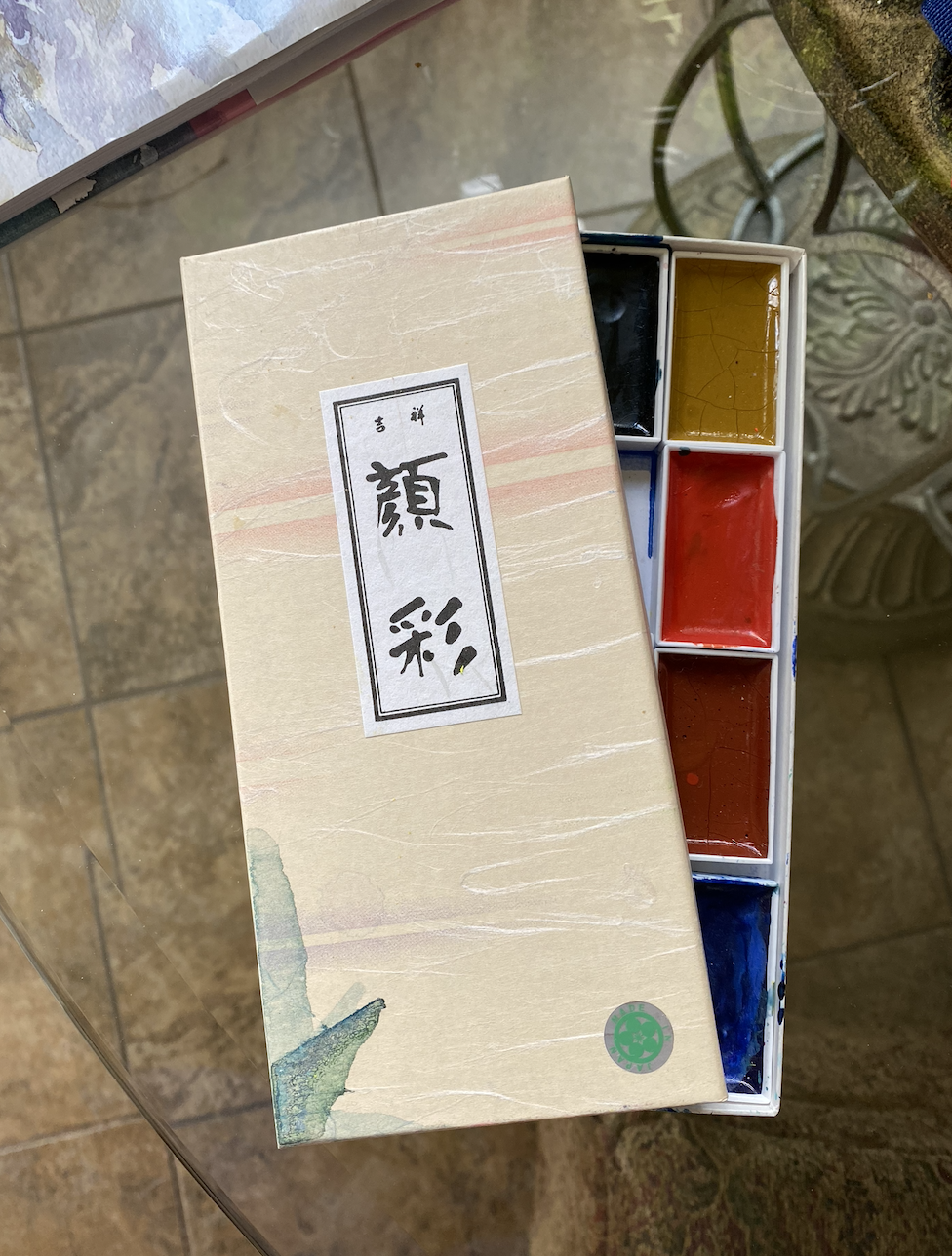
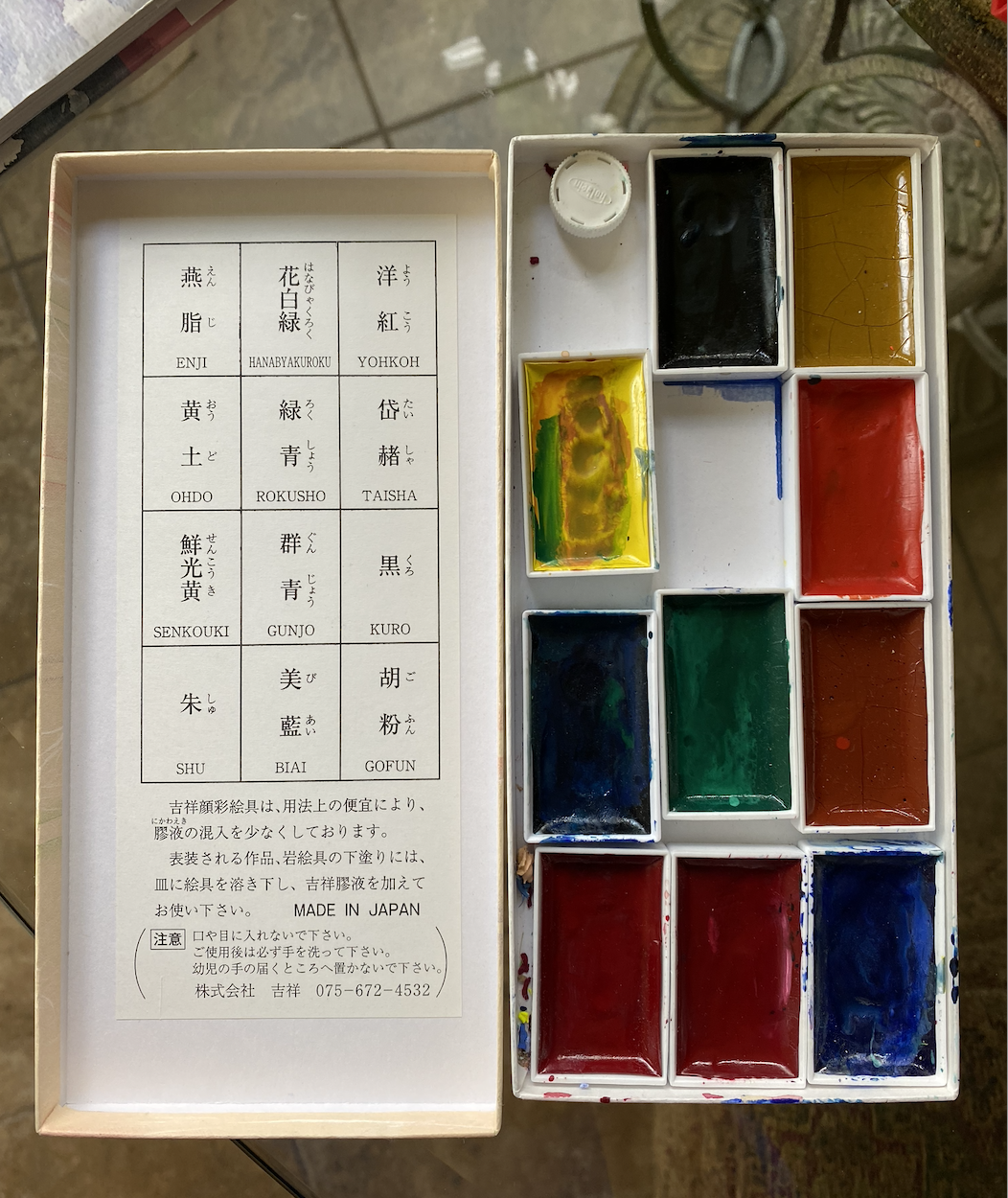
The paper for the poppies above is handmade paper made of recycled T Shirts, which can be found at Two Hands Paperie in Boulder. I really like this paper for watercolor. I was not sure how it would look at all, and I’m not sure of the paper’s weight or if it is considered hot or cold press. Whatever it may be, it has a very pretty effect when painted with these watercolors.
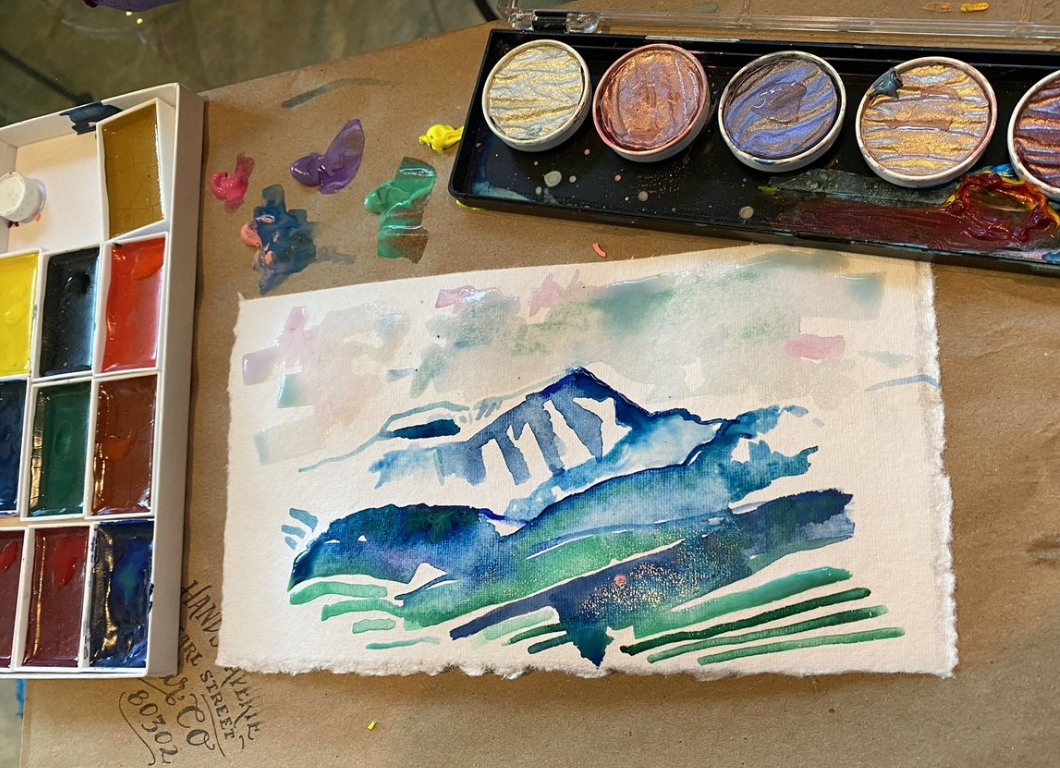
I also found the iridescent watercolors, Coliro watercolors, at Two Hands Paperie. Two Hands Paperie also carries many other handcrafted watercolors. The world of handcrafted watercolors is brand new to me, and it’s very fun to get into. I’m mostly just excited that this is a thing that people do - they make their own paint and sell them online in small batches. It’s much like people who make handcrafted journals or sketchbooks.

No dis on big paint brands, but there is something so fun about looking at and buying small batches. I feel a bit like I am wielding a magic potion, and in a way, that’s exactly what handcrafted watercolors are.
To figure out a bit more about how colors worked on the paper, I painted a swatch.
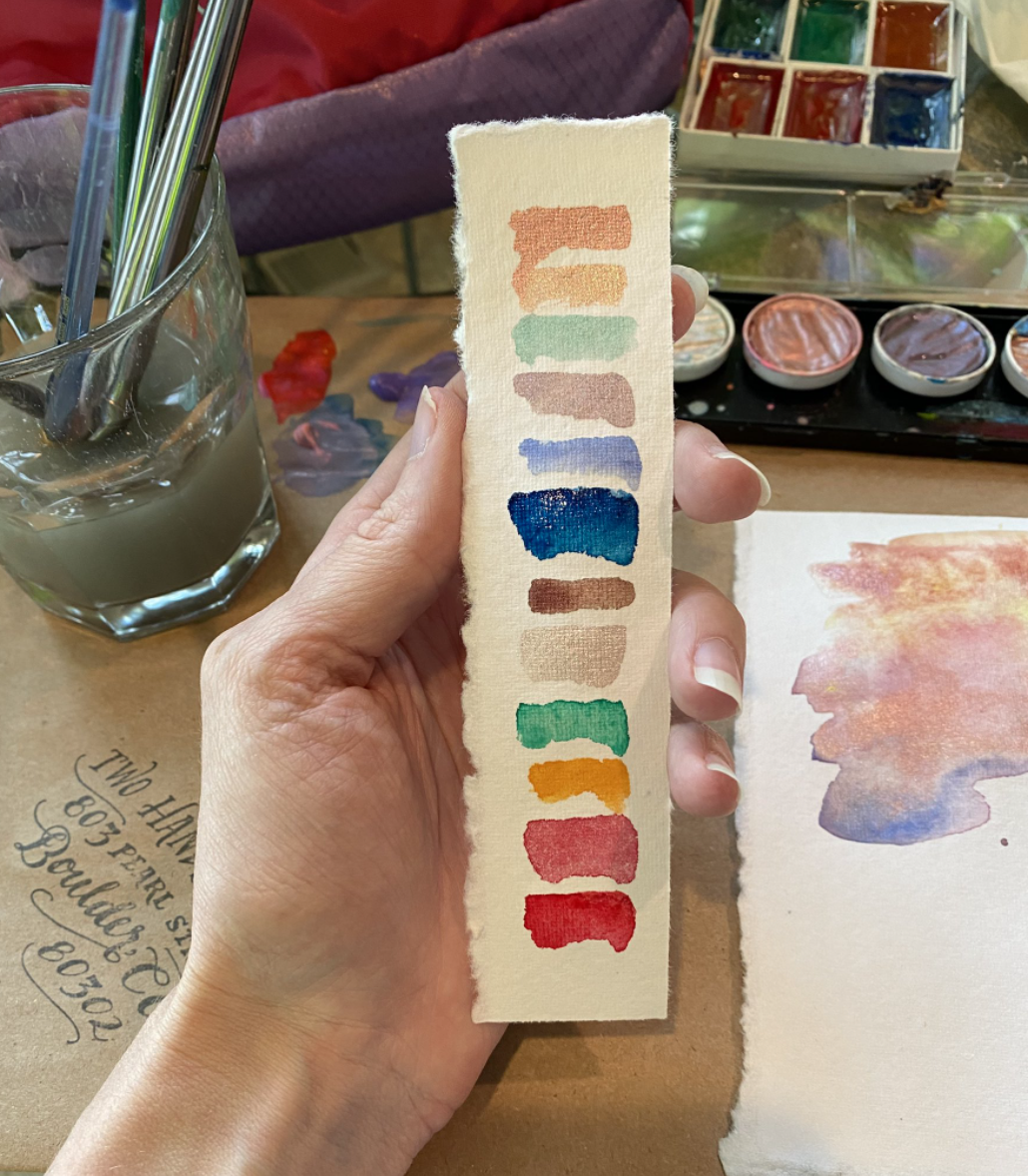

I painted a few more poppies, this time layering a bit of the Yasutomo paint and adding just a small accent of the Coliro iridescent paints to the flowers. This was really fun.
My next project with the Coliro paints will be iridescent animals, I’m thinking of animals like hummingbirds or even beetles that have shiny carapaces.
Overall, I feel like I am off to a good start with watercolors. The key for me turned out to be not approaching it blindly and just buying paints and brushes, but sticking with a book and reading as much as I could about it, and getting quality paints and paper that I could get excited about. To sum up my approach:
Don’t give up!
Get a book with good writing and inspiring art. Ideally the book will say exactly what kinds of papers and brushes to try, and sometimes, paints
Paint different subjects with different colors.
Making swatches or small test areas of colors is a good idea to understand what the colors look like on certain papers, and how the colors behave or ‘set’ on the paper
Try something a bit new - iridescent and/or handcrafted watercolors are a fun place to start
Pycon 2022 Recap!
It was great to meet the people I met at Pycon and to see all of the talks. I enjoyed Salt Lake City a ton - I wasn’t sure what to expect, never having been to the city before other than passing through as a kid, and I was delighted with how pretty Salt Lake City is.
I wrote this quick recap on the conference, and, since it will be in Salt Lake City again next year, I added some notes about what I liked about Salt Lake City.
Conference Format and talks
What I liked most about each of the talks was that they were only 30 minutes each. No questions were taken at the end of each talk, due to covid guidelines. Perhaps oddly, I did like that there were no open questions at the end, because each speaker usually encouraged audience members to ‘find them in the hall’ instead of ask a question in front of 200 other people. There was a kind of approachability here which I really liked. I’ve been to some other kinds of conventions where the speaker gets on stage, gets off stage, and virtually runs away from any audience members. I’m sure there were some hallway-shy speakers at Pycon, but for every talk I saw, each speaker encouraged audience members to meet up or ask questions in the hall.
Keynotes
I loved the talk from Sara Issaoun, which you can view on youtube below!
https://www.youtube.com/watch?v=x6SWPjdxvEI

What I thought was most interesting about this talk was the worldwide collaboration needed in order to get the imaging completed. I won’t spoil much more than that! Watch the talk!


Salt Lake City
I loved walking around Salt Lake City. Everyone was very nice, to the extent that some local passerbys helped me figure out the parking system utilized by the city when they saw me standing around looking confused. A person whizzed by me on a sidewalk on a scooter and shouted “Sorry!” and I said “Sorry!” and they said “Sorry!” again. Usually, in other cities, cough cough, scooter-riders nearly mow me over without a word.

There are tons of restaurants to check out in Salt Lake City if you’ve never been there before, or recently. We didn’t have a lack of places to eat or areas to check out over the weekend after the last conference talks of each day.
I was surprised and happy to see that there is a Cotopaxi store in Salt Lake City, and it’s right by the convention center. After getting my Cotopaxi jacket and backpack at REIs in DC and Colorado for a few years, there was nothing quite like getting to go to a store where ALL of the selection is Cotopaxi. I picked up a new backpack and some smaller packs to carry things like my brushes and paints.

The best place to stay for this conference is probably the Marriott, which is across the street from the conference center. I do have to say I loved our little Air Bnb, it was super close to the conference center, but we found ourselves calling an Uber/Lyft a few times as the area is hilly and takes a bit of walking.

I hope I get to go back to Salt Lake City in 2023 but we will find out if Baby Jewell (due date August 4!) will be okay to travel or not by then. I did see a couple other parents of babies at the conference but not many. It’s hard to get those little guys on a plane or across the country by car. Fortunately, the venue did seem as kid-friendly as possible.
The only bad thing that happened at Pycon was I didn’t win the raffle that Amazon had going for the super cool LED python, I would have loved that thing! Overall the conference was a blast and I loved every moment.

Press Reset - Jason Schreier
This is one of those books where I hesitated in buying it because, being a fairly connected person who stays up to date with the games industry, I already know that the industry is dramatic.
I bought the book and started reading it with one question in mind:
Would this book be a Jude-the-Obscure kind of drama, where people get fired left and right and lose their legacies in a heartbeat, and it’s all very grisly?
Or, would this book be more staid in it’s approach? Would it have actual solutions to the massive problems in the game industry?
Turns out, I was in luck, and the latter question turns out to be the question where the answer is ‘yes’.
The subtitle of the book “Ruin and Recovery In the Video Game Industry” turns out to be very accurate. Yes, there is discussion of the Ruin, yet there is also discussion of the Recovery side of things. I found this to be very hopeful.
I enjoyed this book very much as it was not as negative as I thought it would be, and the anecdotes were very focused on strategy. From the very first chapter, the book talks about real situations happening in real boardrooms. The interview style and writing doesn’t feel like gossip, it feels more like watching an interview documentary.
Selfishly, it was nice to read about many of the conflicts in this book. Anyone who has gone into the office and yelled about the color of a button or felt like throwing something after a creative argument with a product manager/designer/executive or if you’ve BEEN that designer getting something winged at you, this book will probably be highly relatable to you. Most of all, what is strangely comforting is that, in some of the situations in the book, even in the best possible outcomes, people can still get laid off. We could be the most perfect designer on the planet, our product could sell millions of copies and be beloved by years, and at the end of the day, there’s still a possibility of losing one’s role at companies like this.
Schreier does address the burnout that can emerge from this kind of life on the edge. It’s hard to read a few hundred pages about people who move their families, buy new houses, and lose their roles within a year, yet the silver lining for Schreier arrives in the form of an unlikely savior: The popularity of remote work after the coronavirus crisis. That, and the formation of smaller studios working on contract basis, and the risks of going into games are reduced quite a bit.
While I’m not a person who works in the game industry, I saw many parallels in this book with the game industry and where I have spent my career: the tech and software sector. I think this book would be useful to read for others like me - if you’ve been in tech and ever seen the wild ups and downs that come with the territory, this book will give you a sense of camaraderie.
Another kind of reader that I think would appreciate this book is someone who is thinking about getting into games as a career. There are countless anecdotes that are good to keep in mind, both in terms of situations to avoid, and also solutions to difficult problems that have been inherent in the industry for a while.
Ultimately I say this book is a ‘yes’ - if you’re interested, get it for sure!
Disrupting the Game: From the Bronx to the Top of Nintendo - Reggie Fils-Aimé

As of this blog’s publish date, this book is very new! It was released on May 3 of 2022 - I didn’t know this when I bought it, I simply thought it looked like a cool book and I knew of Fils-Aimé’s work from watching Nintendo keynotes and release videos. It’s worth picking up if you haven’t already.
What makes this book different from other business books or business biographies is that Fils-Aimé describes specific situations in meetings, mentorship exchanges, and countless moments where he makes decisions. The reasoning behind the decisions are laid out, too.
I find this refreshing! In so many other nonfiction books of the business genre, the author’s steps to success seem shrouded by platitudes or combed-over moments. Fils-Aimé discusses how he applied for college, how he gets his first job, and how he works in his various roles. He describes problems that he comes across, both on the product level and in situations involving personnel, and how he approaches and solves those problems. I see that Fils-Aimé has an incredible ability to recall big moments, and also to recall small details. He remembers how to structure a memo at his first job, for god’s sakes - this would be like me remembering how I formatted and submitted an Asana ticket in 2010 (no, I don’t remember that very well).
This has to be a chief hallmark of a powerful leader - they can see the details, and they can also see from the mountaintop.
Aside from the boardroom dialogues and college app/interview tactics, the other highly familiarizing aspect of this book that I enjoyed is that I remember being around many of the brands that Fils-Aimé worked on in the 90s. He worked on campaigns for Crisco shortening. I don’t know about you, but we definitely had Crisco in our kitchen cabinet when I was growing up. Pizza Hut’s Personal Pan Pizza? Reggie worked on that, too! Chances are good that if you grew up in America in the 80s, 90s, and early aughts, you bought a product that Fils-Aimé and his teams marketed. Or, you at least saw one of his campaigns.
What I loved learning about most in this book is that Fils-Aimé was an early customer of Nintendo before he was ever a chief executive there. He describes in detail how he played games on the SNES, and also how he was quite a power-user. He owned more than 100 games, way over the average amount of games that households owned at the time.
I first became aware of Reggie Fils-Aimé’s career at Nintendo in the same way that I think many people did - it was the viral video where he gets into playing the Wii and says “My body is ready!” to describe getting ready for the active experience of waving the Wii controllers. This was one of those moments on the internet that was iterated on ad-infinitum, and it wasn’t wholly to make fun of Reggie, it was more because, I think, people loved him, they loved this moment. What’s not to love about this big guy getting into a game and saying something kind of nerdy and kind of adorable? The line “My body is ready!” was quoted in a Pokemon game - from this, fans know that through Reggie Fils-Aimé, Nintendo had gained an ability to laugh at itself in a good-natured way.
I think that it’s Fils-Aimé’s good nature that is the strongest part of his ability as an executive. There’s so much negativity and sarcasm in marketing and corporate spaces these days, to the extent that Ryan Holliday wrote “Trust Me I’m Lying” about being a manipulative story-twisting marketer, and has since moved on to focus on discussing stoic lifestyles. Years spent as conniving, manipulative Mad Men ideally end with retirement as a buy-nothing page admin who posts a lot about resilience and meditation. Marketing ecosystems for some brands tilt towards being so sassy and irreverent that it’s something to escape, not any place to build a legacy. Nobody wants to be there forever, unless they have to be - hence the allure of short-term thinking.
Fils-Aimé is a good role model in this vein. He thinks long-term. He doesn’t have a snobbish or sassy bone in his body. There’s nothing deceptive or money-grubbing about what he does to market brands, rather there’s a love of the fineness of the products and respect for the customer and collaborator alike. In a strange way, it’s as if Fils-Aimé disrupts the game by being the surprising thing of all in an age of irreverence: he’s traditional, respectful, and hard-working.
This book was useful to me as a business professional - I think it would be enjoyed by anyone who is a student or a seasoned executive.

Wacom Cintiq Pro 24 Review
TL:DR: If you’re an artist, get a Cintiq today! What are you waiting for?
My style and history as an artist:
I’ve been an artist my whole life and I started making digital work in MacPaint as a kid in the 90s. I make traditional drawings and paintings in addition to working digitally. I have been using an iPad Pro since 2016 to make digital drawings, everything from figure drawings, to a comic that I publish online called Tilted Sun. I’ve loved using Procreate and also Clip Studio Paint on the iPad Pro for the past six years. Ever since I got my first iPad Pro in 2016, I’ve been making more and more digital work.


^ A page from my comic, Tilted Sun, and a drawing of a figure model. Both digital art pieces were drawn on an iPad Pro - the comic in Clip Studio Paint, and the model is drawn in Procreate.
Long story short, this review is written from the point of view of a person who has been primarily using an iPad for making digital drawings.
This is my first Cintiq but not my first Wacom product. I’ve utilized the Intuos 4 and other tablets in the past with, personally, no success.
The Cintiq 24 is different, for me, than the non-screen Wacom products I’ve tried. The Cintiq is an experience of pure joy.
Size:
The Cintiq 24 is the right size for me. I would say it’s very large.
I was considering the Cintiq 32. In recent years I’ve adopted a ‘Go big or go home” mentality because it usually works out for me. In this case, I am very, very glad I got the Cintiq 24 instead of anything larger, because that would have been too large for me.
I’m 5’11 and I’ve been lucky to have very long arms and legs. As soon as I turned 13 years old, I became a bit of a treelike person, very tall and slender. Back when I bought more clothes before Coronavirus, I usually tried to get clothes with extra-long sleeves and extra-long legs. This is important when it comes to the Cintiq because it is easy for me to reach across most of the Cintiq 24, however, I noticed in some reviews that some artists struggled with reach for both the 24 and the 32. So, if you’re a big and tall person, you might have better comfort with reach with this particular device than someone who is say, 5’2. That said, if you’re 5’2 and you are fine with things like painting murals, using your whole arm, etc, I can’t see this as being much of a concern.
Here is a photo of the Cintiq 24 with my sunglasses on it for reference.

If you’re still on the fence and size is a primary concern, what could be done is measuring out a piece of cardboard or a canvas that is about the same size as the 24, and seeing if you generally feel comfortable reaching across it while sitting down. I’d say one of those extra-large drawing pads would be good for this, too.
Also, what can help is getting a stand or a mount for the Cintiq. I personally like it without any stand, but I can see how a lot of other creators would have a better time with a stand or a different angle for the machine.
File Management:
The nicest thing about the Cintiq 24 so far compared to using my iPad Pro is that I don’t have to worry about extra considerations around managing large files.
The iPad is a great machine and well made, but, right now, in 2022, it is not what I consider to be a Real Computer when it comes to file management. (I say this in hushed tones so my iPad does not overhear.)
I fully realized just how bad file management is on the iPad when I went to retrieve some files for a project. The files were a few months old. I was able to locate the files just fine, but after that, all I tried to do was export the files from Clip Studio Paint into Dropbox, and the iPad did little more than become very hot in my hands, and fail to upload the files. It took me a decent 30 minutes of fussing, watching loading bars, getting bored and reading Twitter, watching the loading bar, to figure out how to get a 40 MB file off of the iPad and into Dropbox, airdropped, anything at all.
I have tried what I would say is … a lot … of data storage and file management solutions with the iPad. I’ve got the $2.99 monthly extra iCloud storage, I’ve got the $9.99 monthly Dropbox. I gave it, as far as I can see, a solid effort. When it comes to file management and exporting to Dropbox or saving files, I had to do exactly 0 effort with my Cintiq, as it is effectively a display hitched into my computer. No watching loading bars, no heating, no getting bored and checking Twitter. Just files where I want them, right away.
The file management on the iPad was so annoying for me that it reminded me of having very stylish, good looking shoes, yet the shoes are incredibly uncomfortable, unwalkable. It’s fun to look good in fantastic shoes, and you can wear them for 2 hours a day or so, but it’s not so fun to go down the stairs in them or run up the mountainside with them.
I’m sure that in a few years, this comparison review between the iPad Pro and Cintiq 24 will be a bit more irrelevant, and the iPad will be a Real Computer (sorry iPad!). The iPad will overflow with space instead of feeling like a thumbdrive. In a few years.
Display itself:
A 'little thing' I like about the tablet is the art stays on, like I will get up from my desk to stretch or grab some water, and I come back and the art is still on the tablet and it hasn't gone to sleep. Very tiny thing but something I like a lot.
Speed and Feel:
The Cintiq 24 feels more like drawing on paper than the iPad Pro, which feels like drawing on glass. I really like the soft matte feel of it and the feel of the pen. I haven’t switched out the pen nibs very much, but I can see that as I get more comfortable with the machine, I might feel a bit more experimental and expand my nib use over time.
Conclusion:
Getting the Cintiq 24 was my effort at giving my art skills the most honor that I possibly could. I am lucky that it turned out wildly positive for me. It didn’t feel like driving a sportscar after driving a junker for several years - I never had hardware issues with the iPad. Yet, the Cintiq truly felt like a new, big, simple car after driving a bit of a cramped machine for several years. Much in the way that the iPad “Just works”, the Cintiq “Just works,” too, and it’s a lot bigger, more comfortable, and it’s easier to manage those files.
I watched a few Youtube review videos before deciding on the Cintiq, and if I had any advice to a friend who is also watching Youtube reviews on this specific product, I would say to listen to haters and critics with a big grain of salt. Something that someone else hates and gripes about the Cintiq might be something that you love. Also, I think that some artist reviewers can lean towards being a bit too negative or flaw-focused. Negative reviews can often rise to the top of our consciousness and they are often too-heavily-considered by algorithms. However, take what I say with a grain of salt too, because I trend towards being a very positive person who is willing to power through various issues in order to reach goals.
When I think of the positives that the Wacom Cintiq Pro 24 has brought to my life, my cup overfloweth. I can’t think of a single negative about it. It takes up my whole desk, and I like it that way. The way I see it, the thing I love most in life, art, should take up the most real estate, both metaphorically and physically.
So I would say that if you’ve been thinking about a Cintiq, go for it. I say that with all the warmth and encouragement in my heart.